Region

Museums, galleries and heritage in Normandie

328 places to discover across Normandie.

110 museums153 galleries26 castles37 religious sites2 heritage

Including Mémorial de Caen, Cathédrale Notre-Dame de Rouen and Abbaye du Mont-Saint-Michel.

37 of 37 places, sorted by distance from the center

Religious site

Église Sainte-Catherine de Honfleur

Honfleur

Religious site

Cathédrale Saint-Pierre de Lisieux

Lisieux

Religious site

Basilique Sainte-Thérèse de Lisieux

Lisieux

Religious site

Église Notre-Dame de Dives-sur-Mer

Dives-sur-Mer

Religious site

Cathédrale Notre-Dame du Havre

Le Havre

Religious site

Église Saint-Joseph du Havre

Le Havre

Religious site

Abbaye de Graville

Le Havre

Religious site

Abbatiale de Saint-Pierre-sur-Dives

Saint-Pierre-en-Auge

Religious site

Abbaye du Bec-Hellouin

Le Bec-Hellouin

Religious site

Abbaye aux Dames

Caen

Religious site

Église Saint-Pierre de Caen

Caen

Religious site

Abbaye aux Hommes

Caen

Religious site

Église Notre-Dame de Caudebec-en-Caux

Rives-en-Seine

Religious site

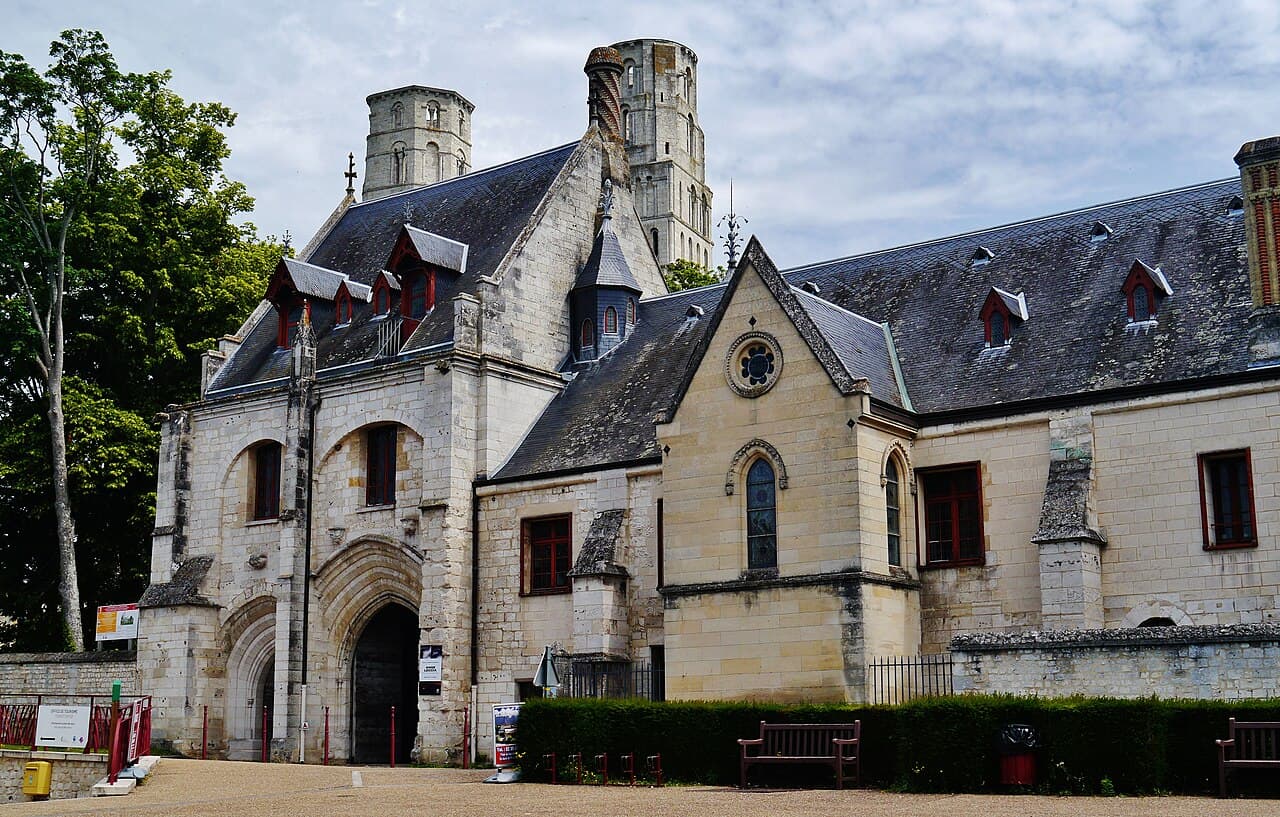
Abbaye de Jumièges

Jumièges

Religious site

Abbaye Saint-Wandrille de Fontenelle

Rives-en-Seine

Religious site

Abbaye de la Trinité de Fécamp

Fécamp

Religious site

Abbaye de Valmont

Valmont

Religious site

Abbaye Saint-Georges de Boscherville

Saint-Martin-de-Boscherville

Religious site

Cathédrale Notre-Dame de Bayeux

Bayeux

Religious site

Église Sainte-Jeanne-d'Arc de Rouen

Rouen

Religious site

Cathédrale Notre-Dame de Rouen

Rouen

Religious site

Église Saint-Maclou de Rouen

Rouen

Religious site

Abbatiale Saint-Ouen de Rouen

Rouen

Religious site

Basilique Notre-Dame-de-Bonsecours

Bonsecours

Religious site

Église Notre-Dame de Louviers

Louviers

Religious site

Cathédrale Notre-Dame d'Évreux

Évreux

Religious site

Cathédrale Notre-Dame de Sées

Sées

Religious site

Abbaye de Cerisy-la-Forêt

Cerisy-la-Forêt

Religious site

Église de la Madeleine de Verneuil

Verneuil d'Avre et d'Iton

Religious site

Abbaye de Mortemer

Lisors

Religious site

Basilique Notre-Dame de Montligeon

La Chapelle-Montligeon

Religious site

Abbaye de Hambye

Hambye

Religious site

Cathédrale Notre-Dame de Coutances

Coutances

Religious site

Collégiale Notre-Dame-et-Saint-Laurent

Eu

Religious site

Abbatiale de Lessay

Lessay

Religious site

Basilique Sainte-Trinité de Cherbourg

Cherbourg-en-Cotentin

Religious site

Abbaye du Mont-Saint-Michel

Le Mont-Saint-Michel

04About

A region shaped by history and light

Normandy's cultural identity is built on two distinct but complementary layers. The first is the Second World War, whose traces remain physically present along the coast: museums such as the Musée du Débarquement in Arromanches, the D-Day Experience in Carentan-les-Marais, the Centre Juno Beach in Courseulles-sur-Mer and the Musée Mémorial d'Omaha Beach in Saint-Laurent-sur-Mer each document a different sector of the landings, while the Musée de la Bataille de Normandie in Bayeux and the Musée de la bataille des haies in Carentan-les-Marais retrace the ground campaign that followed.

The second layer is artistic: Normandy's coastal light drew painters throughout the 19th century, a legacy honoured today at the Musée des impressionnismes Giverny and at the MuMa Musée d'art moderne André Malraux in Le Havre, whose modern collections span more than a century of painting. In Rouen, the Musée des Beaux-Arts de Rouen and the decorative arts collections of the Musée Le Secq des Tournelles extend this artistic depth further inland.

Two UNESCO World Heritage sites anchor the region's architectural significance: Mont-Saint-Michel et sa baie, a medieval abbey rising from its tidal bay, and Le Havre, la ville reconstruite par Auguste Perret, a post-war urban ensemble designed by architect Auguste Perret and inscribed in 2005.

05Neighborhoods

Three cities, three cultural identities

Rouen combines Gothic heritage with a strong contemporary art scene: the Historial Jeanne d'Arc occupies the former archiepiscopal palace beside the cathedral, while galleries such as Hangar 107, Outsiders Galerie and Uchiwa Gallery keep the city's art market active.

Honfleur concentrates one of the densest clusters of art galleries in Normandy along its old harbour, including Galerie Katia Granoff, Galeries Bartoux and Galerie de l'Estuaire, reflecting the town's long-standing appeal to painters drawn to its light and its port.

Le Havre pairs its reconstructed modernist centre with a fine arts institution, the MuMa, and a working contemporary art network that includes Le Portique and Mascarade Gallery.

09FAQ

Frequently asked questions

How many days are needed to see Normandy's main museums?

Allow at least four to five days: one for the D-Day beaches and their museums, one for Rouen, one for Honfleur and its galleries, and one for Le Havre and Giverny.

Which museums cover the D-Day landings?

The Musée du Débarquement in Arromanches, D-Day Experience in Carentan-les-Marais, Centre Juno Beach in Courseulles-sur-Mer, and the Musée Mémorial d'Omaha Beach each focus on a specific landing sector; the Musée de la Bataille de Normandie in Bayeux covers the wider campaign.

When is the best time to visit for Impressionist scenery?

Late spring and early autumn offer the softest coastal light historically associated with Impressionist painting, and Giverny's gardens are at their fullest between May and September.

Is Mont-Saint-Michel accessible year-round?

Yes, the abbey and bay are open throughout the year, though tidal conditions vary significantly, so checking tide schedules in advance is recommended for the causeway crossing.

Where is Normandy's contemporary art gallery scene concentrated?

Honfleur has the highest density of galleries, largely centred on painting, while Rouen and Le Havre host a more contemporary and experimental gallery network.

Are the war museums suitable for children?

Most, including D-Day Experience and Centre Juno Beach, offer immersive formats designed to be accessible to younger visitors, though content remains historically serious.