Cultural
Parc de Muskau / Parc Mużakowski
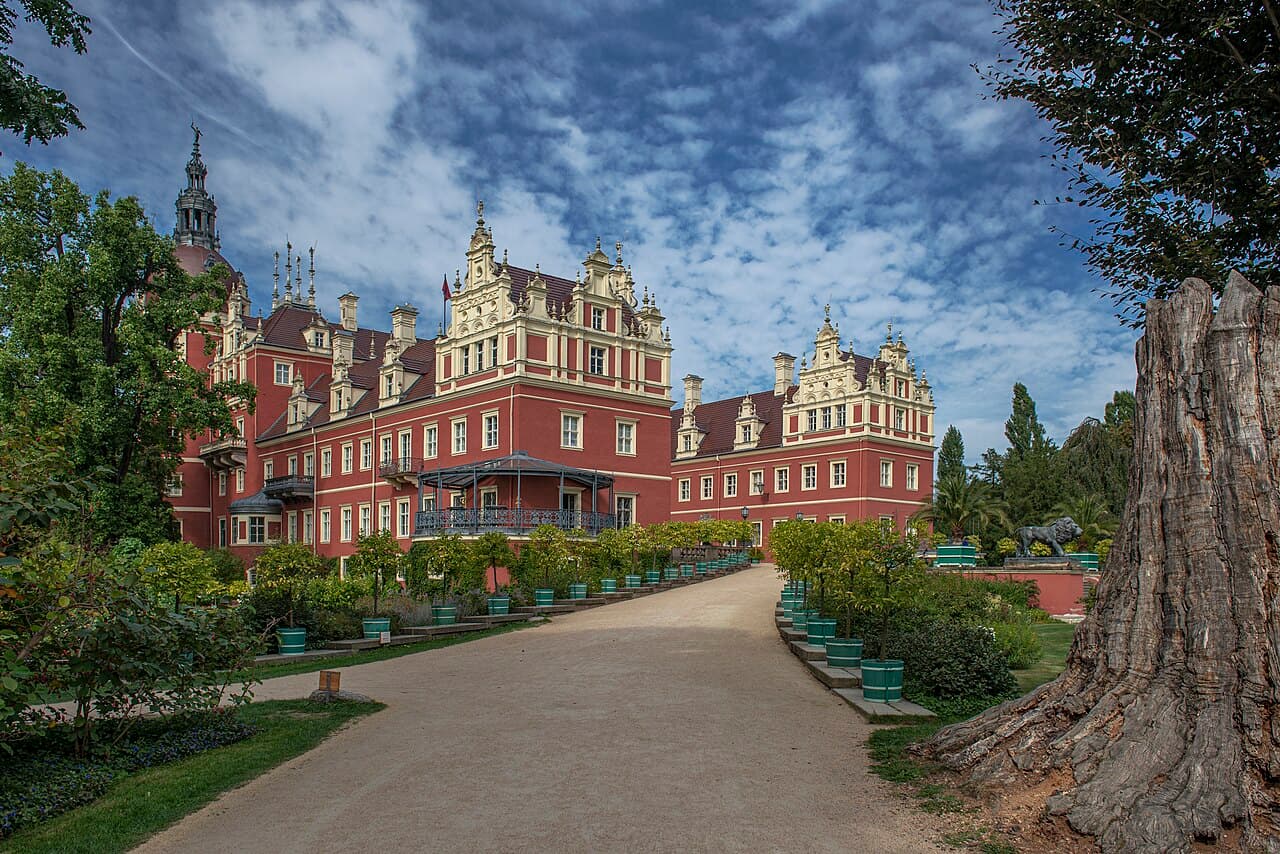
Photo : Marek Śliwecki (CC BY-SA 4.0)
This landscape park straddles the German-Polish border in Lower Silesia, representing a significant example of 19th-century landscape design principles. Created by Prince Hermann von Pückler-Muskau beginning in the 1820s, the park demonstrates the romantic movement's influence on European garden architecture and land management. The site encompasses approximately 830 hectares across both countries, featuring carefully composed vistas, water features, and integrated natural scenery that exemplify the picturesque style. The park's design integrates the Neisse River as a central element, with woodland, meadows, and built structures arranged to create harmonious compositions. Its UNESCO inscription recognizes the park as an outstanding achievement in landscape architecture and its influence on similar projects throughout Europe. Today, the site remains a working landscape that preserves both its historical design intent and its ecological character.