Cultural
Églises de la Paix à Jawor et Świdnica
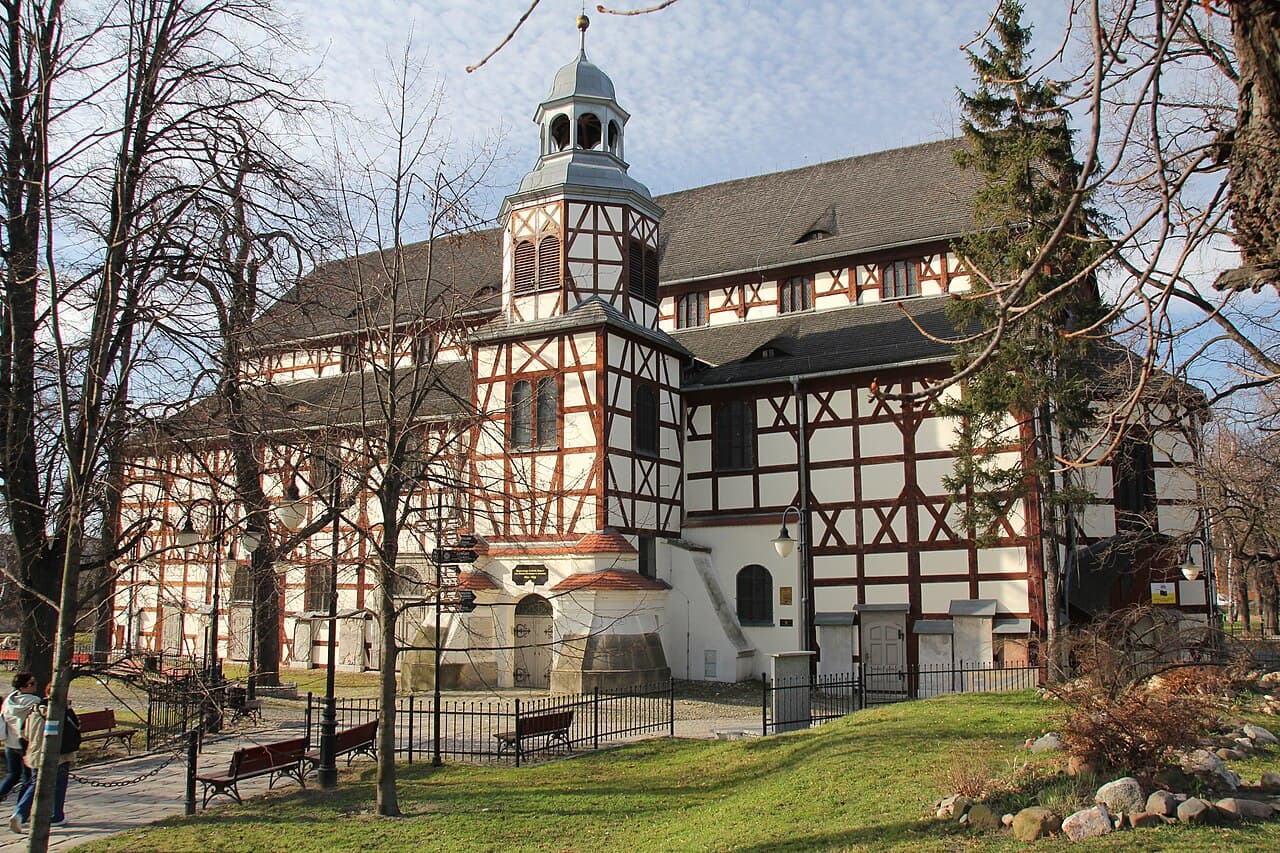
Photo : Danapass (CC BY-SA 3.0 pl)
Located in southwestern Poland, these two wooden churches represent a remarkable example of religious architecture built under exceptional historical circumstances. Constructed in the 17th century in the towns of Jawor and Świdnica following the Peace of Westphalia, they were erected as places of worship for the Protestant community during a period when such construction was severely restricted. The churches were built within strict spatial and material constraints imposed by Catholic authorities, resulting in innovative architectural solutions that maximized interior space while maintaining modest external dimensions. Both structures are characterized by their timber construction, multiple galleries, and elaborate interior decoration, showcasing the craftsmanship of the period. These sites are significant for their historical testimony to religious tolerance and conflict during the early modern period, as well as for their architectural ingenuity in responding to practical limitations. The churches stand as important witnesses to Central European cultural and religious history.