Natural
Sansa, monastères bouddhistes de montagne en Corée
Photo : Jcb-caz-11 (CC BY-SA 4.0)
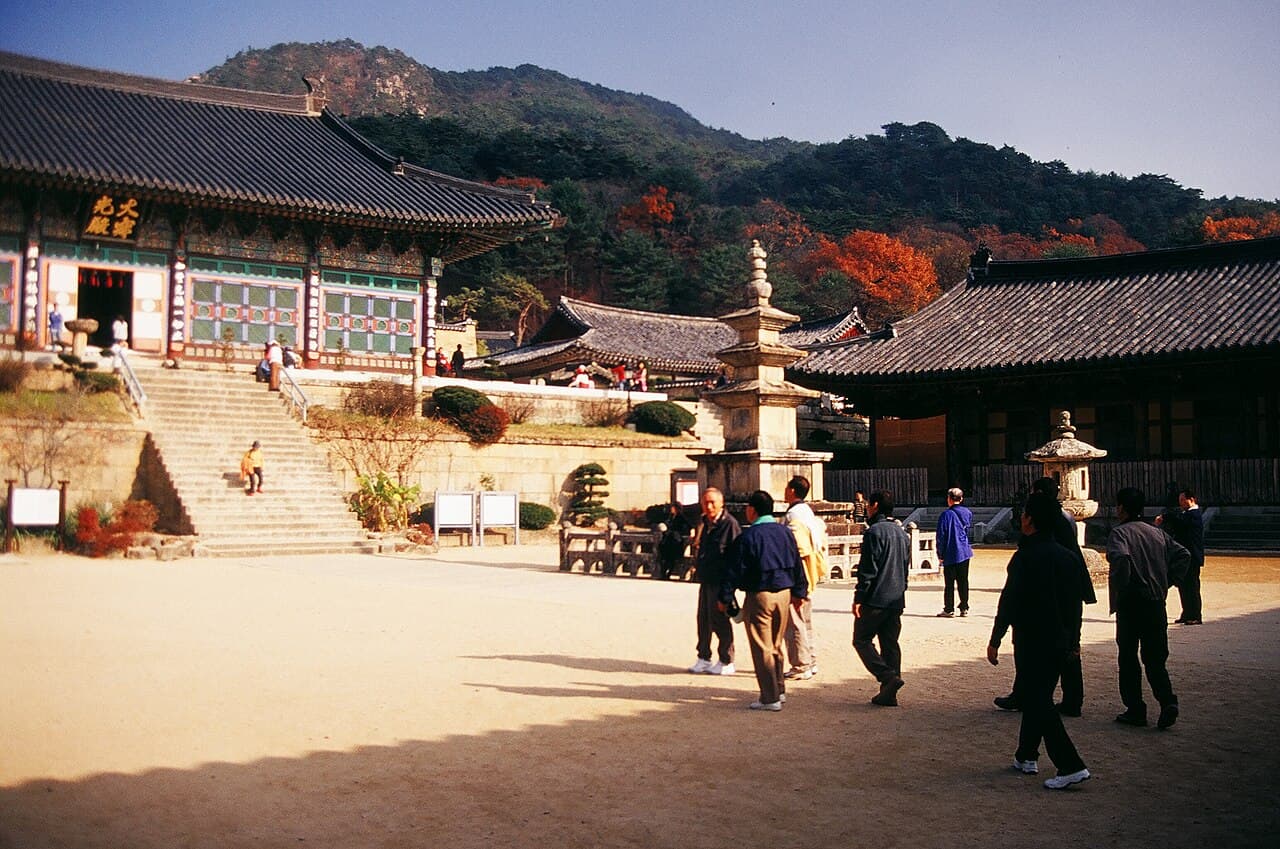
Mountain Buddhist monasteries constitute a distinctive religious and architectural tradition in Korea, exemplified by the Sansa sites scattered across the country's mountainous regions. These temple complexes were established over centuries and reflect the integration of Buddhist philosophy with Korea's natural landscape and indigenous building practices. Situated in remote mountain settings, the monasteries demonstrate sophisticated adaptations to steep terrain and challenging environmental conditions through their layout and construction techniques. The sites are characterized by traditional wooden structures, stone foundations, and careful spatial organization that harmonize with their surroundings rather than dominating them. The Sansa monasteries served as important centers for Buddhist practice, scholarship, and cultural transmission throughout Korean history, preserving distinctive approaches to monastic life and architectural design that differ from Buddhist sites in neighboring regions. These complexes represent a significant example of how religious communities developed sustainable settlements in mountainous areas while maintaining spiritual and cultural continuity.