Itinerary · Grand Est
Metz in 3 Days: Centre Pompidou-Metz and Local Heritage
Three days in Metz, from the spectacular roof of the Centre Pompidou-Metz and the Frac Lorraine for contemporary art, to Saint-Étienne cathedral and the Musée de la Cour d'Or for Gallo-Roman and medieval history, closing with three religious buildings that trace two thousand years of Metz architecture, from late antiquity to the German annexation.
3 days · 7 stops · Quick stop
Overview
Numbers follow the order of the route, day by day — the dashed line is indicative, not a precise driving route.
Day 1
Centre Pompidou-Metz and Lorraine's contemporary art scene
Beneath the hexagonal roof shaped like a Chinese hat, designed by Shigeru Ban and Jean de Gastines, the Centre Pompidou-Metz stages temporary exhibitions drawn from the Paris collections — then on to the Frac Lorraine, 49 Nord 6 Est, named after the region's geographic coordinates, for a closer look at the contemporary art it collects and shows.
 Roof designed by Shigeru Ban
Museum · Metz
Centre Pompidou-Metz
The Centre Pompidou-Metz is an art museum and cultural center located in Metz, in the Bourgogne-Franche-Comté region. It is part of the decentralization policy…
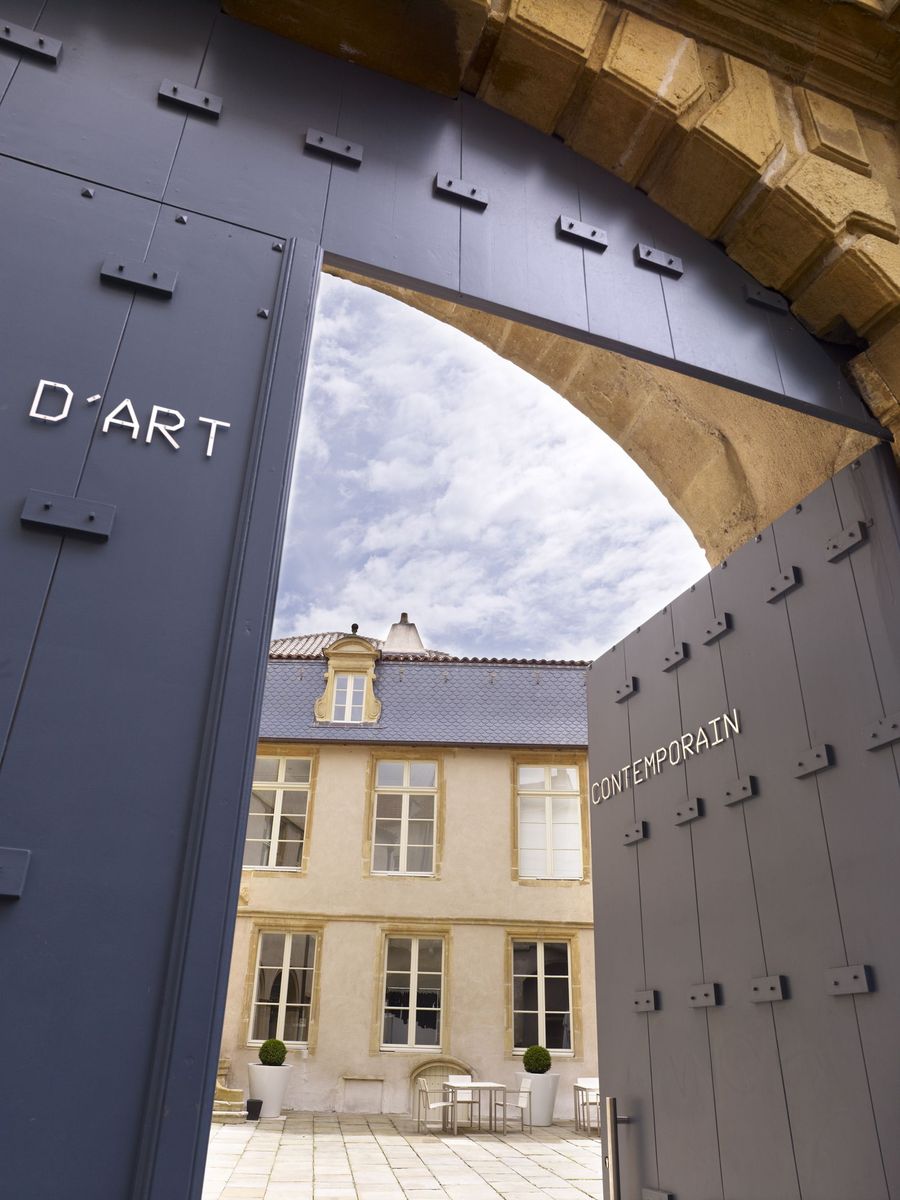 Regional contemporary art collection
Museum · Metz
49 Nord 6 Est - Frac Lorraine
49 North 6 East - Frac Lorraine is the Regional Contemporary Art Fund of Lorraine, a public institution dedicated to contemporary creation. Located in Metz in…
Day 2
The cathedral and Metz's Gallo-Roman memory
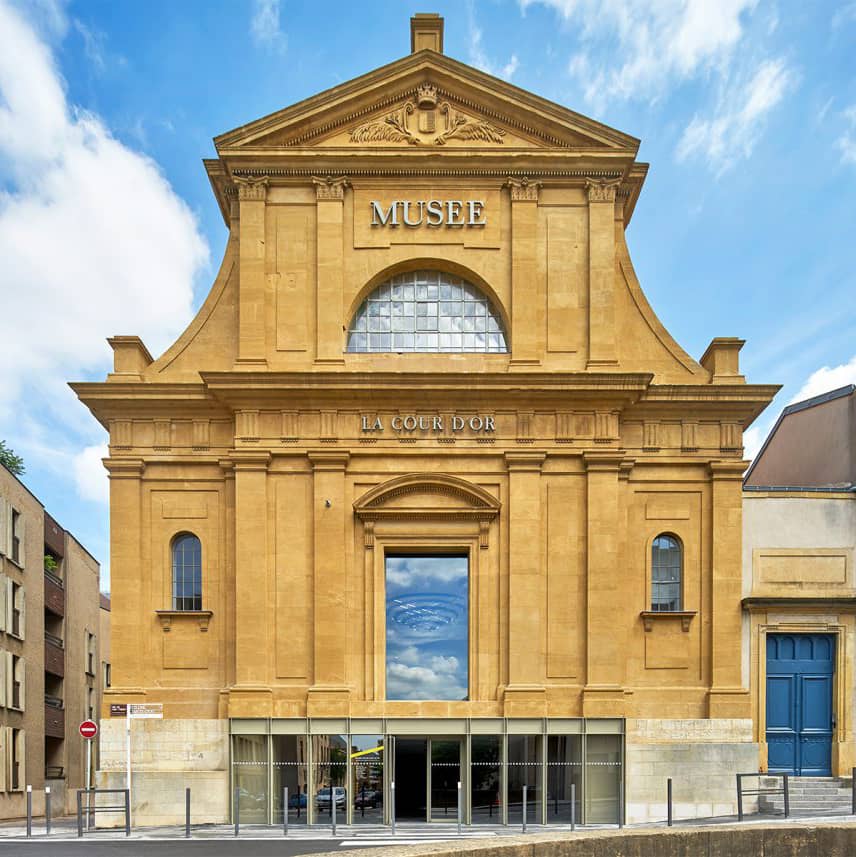
First, the 'Lantern of God': Metz cathedral, Saint-Étienne, with roughly 6,500 square metres of stained glass, including windows by Marc Chagall, beneath one of the tallest naves in France. In the afternoon, the Musée de la Cour d'Or, set in a former convent and built around the remains of Gallo-Roman baths uncovered on site, traces two thousand years of Metz's history.
 Marc Chagall's stained glass
Church · Metz
Cathédrale Saint-Étienne de Metz
La cathédrale Saint-Étienne de Metz est un édifice gothique situé place d'Armes, au cœur de la ville de Metz en Moselle. Construite entre 1220 et 1522, elle…
 Gallo-Roman baths
Museum · Metz
Musée de La Cour d'Or de Metz
The Museum of La Cour d'Or is located in the heart of the city of Metz, in Moselle. It offers approximately 5,000 to 6,000 m² of exhibition space covering two…
Day 3
Three ages of Metz stonework
From late antiquity to the German annexation: the church of Saint-Pierre-aux-Nonnains, among the oldest in France, born as a Roman civil basilica before becoming a convent church; the basilica of Saint-Vincent, a former abbey church with a classical façade grafted onto a Gothic nave; and the Temple Neuf, built on the Petit-Saulcy island between 1901 and 1904 under German administration, whose reflection in the Moselle has become one of Metz's defining images.
 4th-century Roman basilica
Church · Metz
Église Saint-Pierre-aux-Nonnains
Saint-Pierre-aux-Nonnains est une église édifiée entre la fin du IVe et le début du Ve siècle à Metz, constituant l'un des plus anciens édifices religieux de…
 Gothic and classical abbey church
Church · Metz
Basilique Saint-Vincent de Metz
La basilique Saint-Vincent de Metz est un édifice gothique édifié entre 1248 et 1376, succédant à une abbaye bénédictine fondée en 968 par l'évêque Thierry…
 On the Petit-Saulcy island
Church · Metz
Temple Neuf de Metz
Le Temple Neuf est un édifice de culte protestant construit à Metz entre 1901 et 1905, durant la période wilhelminienne. Conçu par l'architecte Conrad Wahn, ce…
Looking for something else?
Filter by region, genre or duration to find the itinerary that fits.
See all itineraries