Cultural
18th-Century Royal Palace at Caserta with the Park, the Aqueduct of Vanvitelli, and the San Leucio Complex
Caserte, Italie
Inscribed 1997
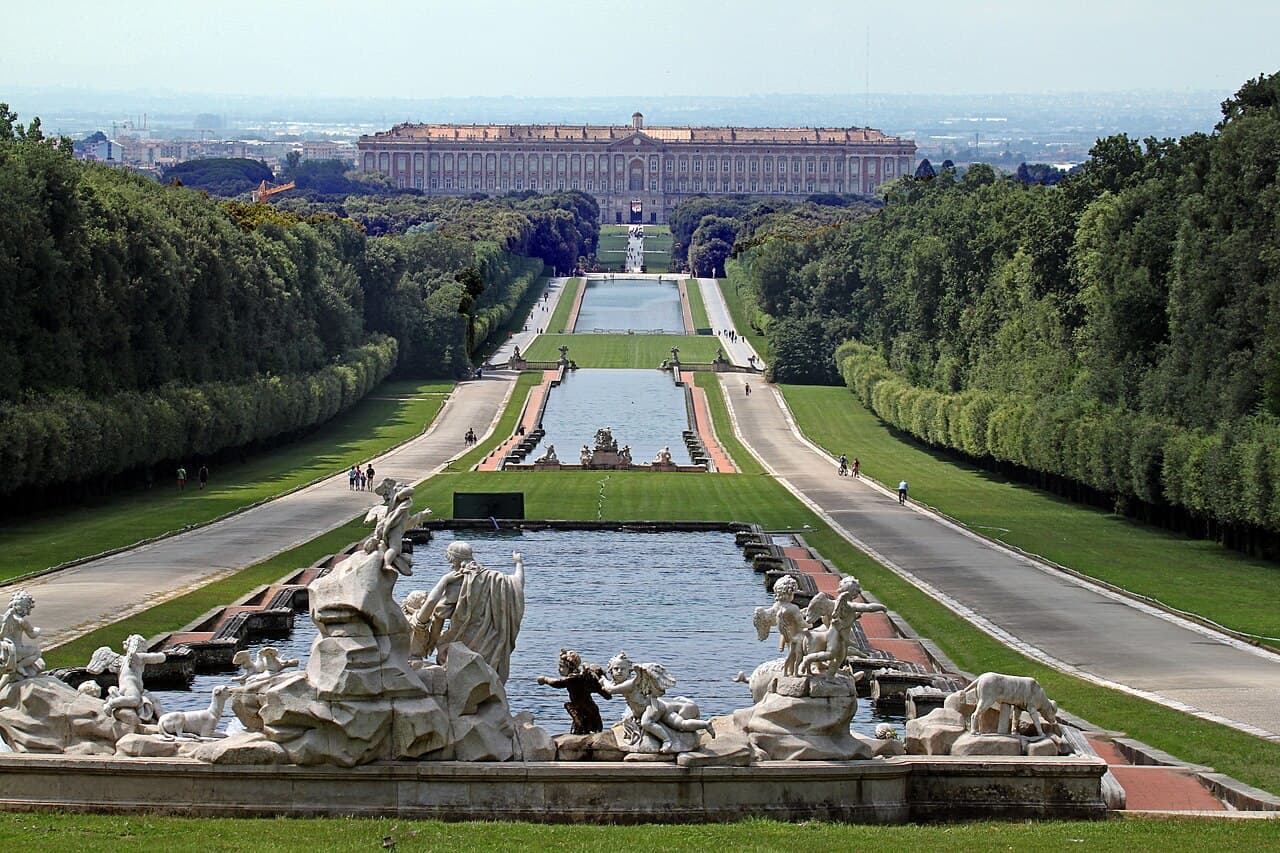
Photo : Carlo Pelagalli (CC BY-SA 3.0)
Situated in Campania in southern Italy, this outstanding example of 18th-century royal architecture encompasses the Palace of Caserta, its extensive park, the Aqueduct of Vanvitelli, and the industrial complex of San Leucio. Commissioned by the Bourbon King Charles VII and designed by architect Luigi Vanvitelli, the palace represents the pinnacle of late Baroque and early Neoclassical design, conceived as a rival to the Palace of Versailles. The site demonstrates an integrated vision of princely power through its monumental palace structure, geometric gardens with cascading water features, and the engineering achievement of the aqueduct system that supplied water across the landscape. The San Leucio complex, established as a silk-manufacturing centre, reflects the Enlightenment ideals of the period and represents an important example of industrial heritage linked to royal patronage. The architectural and landscaping elements together constitute a comprehensive testimony to 18th-century European royal culture and planning. The property was inscribed in recognition of its artistic significance and its representation of enlightened absolutism expressed through integrated architectural, hydraulic, and social planning.
Location
Caserte, Italie
Inscription
1997