Cultural
Ancien Jéricho/Tell es-Sultan
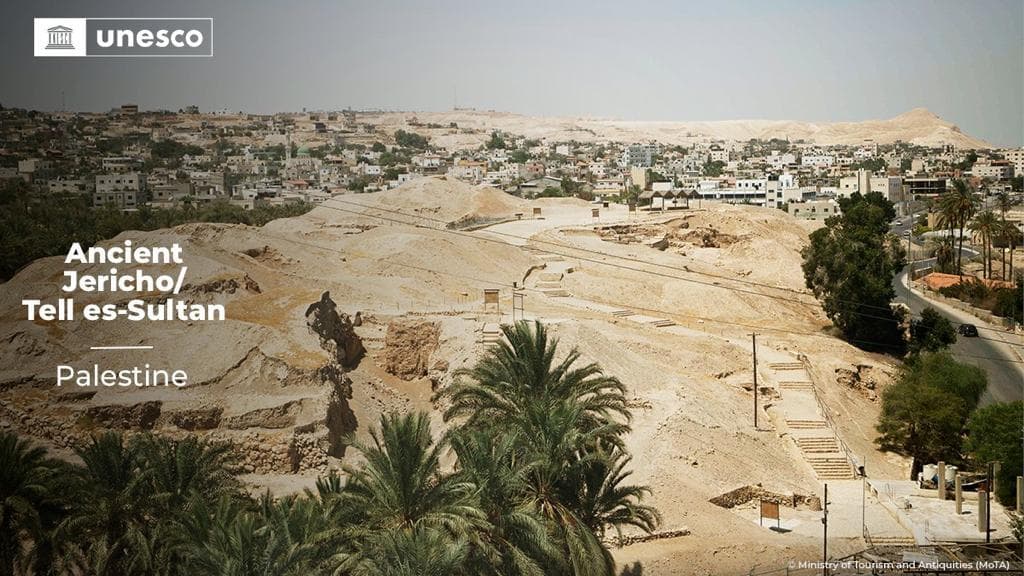
Located in the Palestinian territories near the Dead Sea, this archaeological site represents one of the world's oldest continuously inhabited settlements. The mound of Tell es-Sultan contains superimposed remains spanning thousands of years, documenting the development of human settlement from the Pre-Pottery Neolithic period onwards. The site is significant for its evidence of early urbanization, defensive structures, and occupation layers that provide insight into the region's ancient history. Its geographical position in the Jordan Valley made it strategically important throughout various historical periods. The visible landscape comprises an artificial mound created by successive building and habitation phases, with excavation revealing walls, towers, and domestic structures from different eras. The cultural heritage value of the site lies in its contribution to understanding the early development of settled societies in the Levant.