Cultural
Site archéologique de Leptis Magna
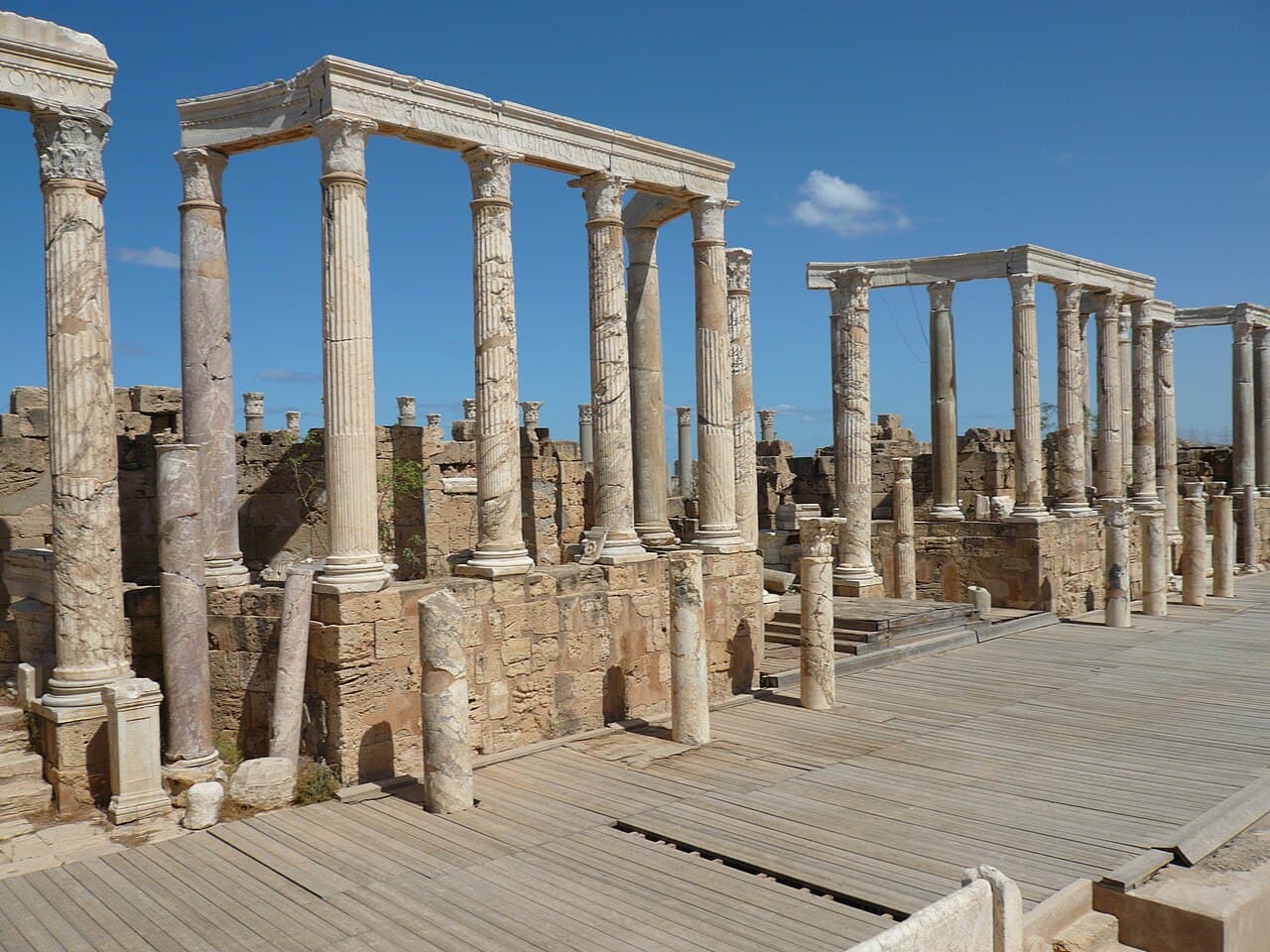
Photo : Francesco Bandarin (CC BY-SA 3.0 igo)
This archaeological site in Libya represents one of the most significant Roman cities of North Africa. Founded as a Phoenician settlement, Leptis Magna developed into a major trading port and urban center under Roman rule, particularly during the 2nd and 3rd centuries CE. The ruins showcase extensive remains of Roman architecture including a forum, theater, amphitheater, and various administrative and residential structures, reflecting the city's former prosperity and strategic importance. The site's preservation provides substantial evidence of urban planning, commercial activities, and architectural techniques characteristic of the Roman period in the Mediterranean region. Located on the coast near present-day Khums, the archaeological remains are situated within a landscape marked by the transition between Mediterranean and desert environments. The material culture and inscriptions found at Leptis Magna contribute significantly to understanding Roman colonial administration and cultural exchange in North Africa.