Cultural
Masada
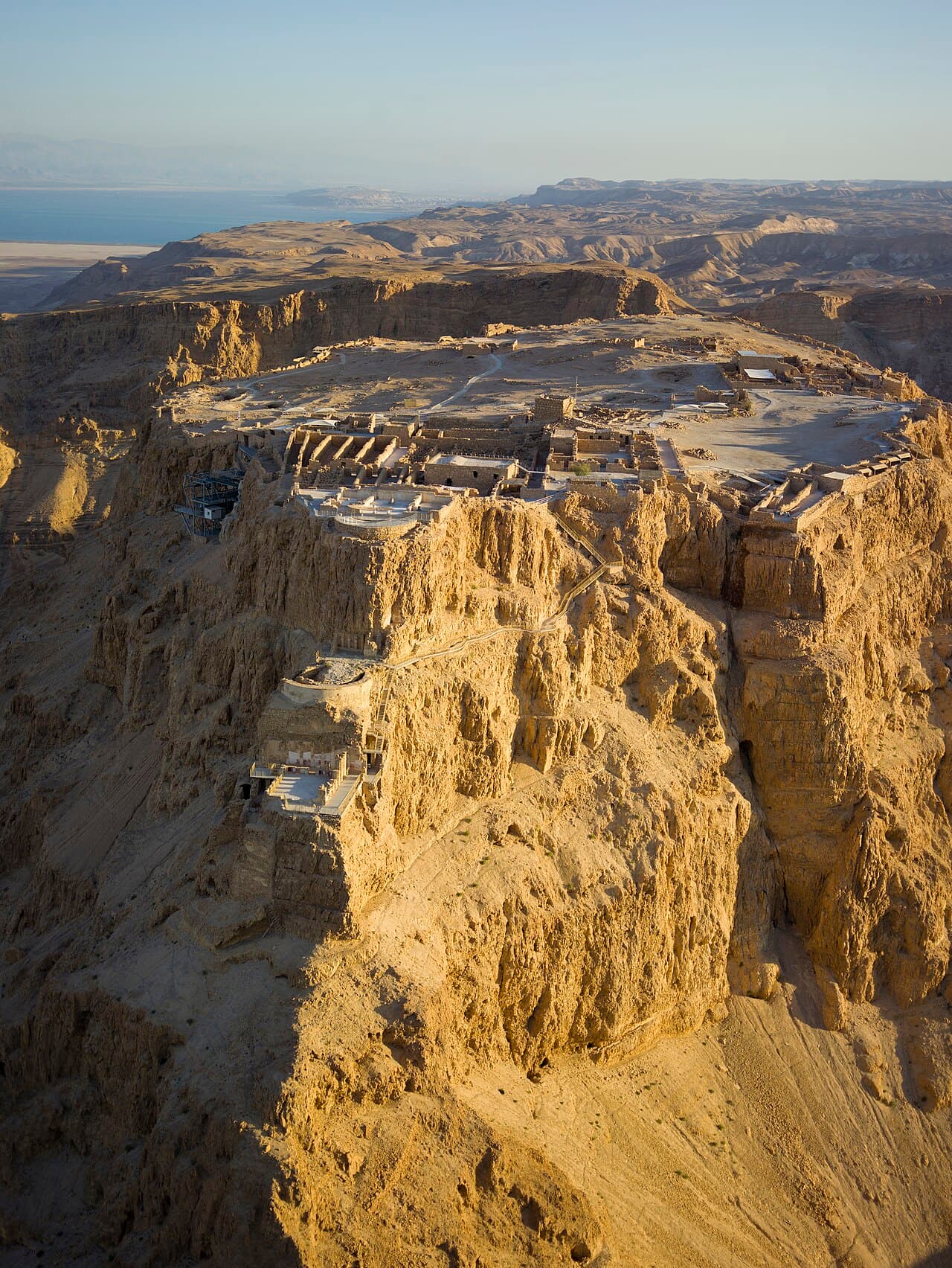
Photo : Godot13 (CC BY-SA 4.0)
Located in the Judean Desert in Israel, this fortified plateau rises approximately 440 meters above the Dead Sea and represents a significant archaeological site of ancient military and political importance. The site consists of substantial remains of palaces, administrative buildings, storerooms, and defensive structures dating primarily to the 1st century CE, when it served as a royal fortress and later as a center of resistance during the First Jewish-Roman War. The dramatic natural geography—with steep cliffsides and a summit accessible only by narrow pathways—made it a strategic stronghold that profoundly influenced the region's history. Architecturally, the site displays both Hellenistic and Roman construction techniques, reflecting the complex cultural interactions of the period. The archaeological remains, including sophisticated water systems and well-preserved structures preserved by the arid climate, provide exceptional evidence of life during this turbulent historical period. The combination of its historical significance, dramatic landscape setting, and archaeological richness makes it an important location for understanding ancient Levantine history.