Natural
Parc national des Everglades
États-Unis
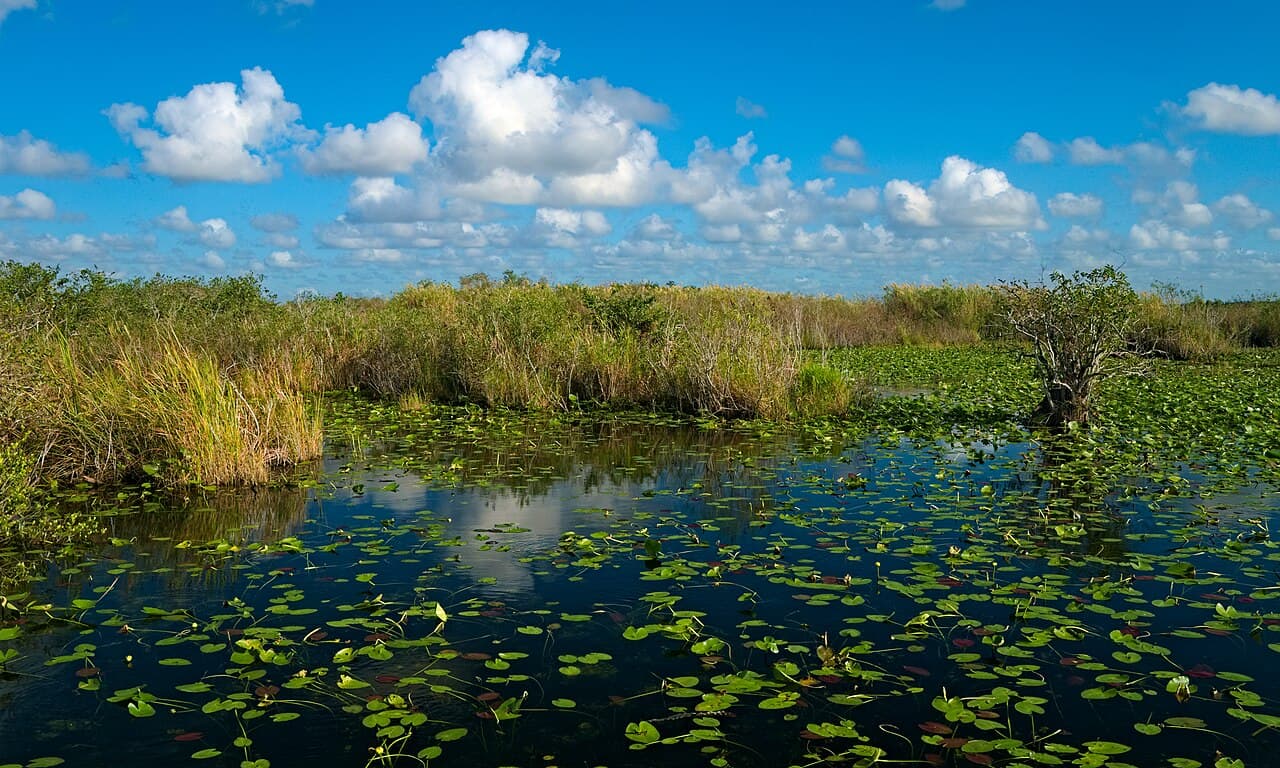
Photo : Daniel Kraft (CC BY-SA 3.0)
Located in southern Florida, United States, this vast wetland ecosystem encompasses subtropical marshes, sawgrass prairies, mangrove forests, and freshwater sloughs. The site represents one of the largest subtropical wilderness areas in North America, characterized by its unique hydrological system where water flows slowly from Lake Okeechobee southward through the landscape. The Everglades support exceptional biodiversity, including numerous endemic species and populations of endangered wildlife such as the Florida panther and American crocodile. The landscape's defining feature is its expansive saw-grass marshes interspersed with tree islands called hammocks, creating a distinctive visual environment shaped by seasonal flooding patterns. The site's ecological significance derives from its role as a complex and dynamic freshwater system that demonstrates intricate relationships between water, soil, vegetation, and fauna adapted to subtropical conditions. Its inscription as a natural UNESCO World Heritage Site recognizes the outstanding universal value of its ecological processes and the irreplaceable nature of this wetland habitat.