Cultural
Sites rupestres du Tadrart Acacus
Libye
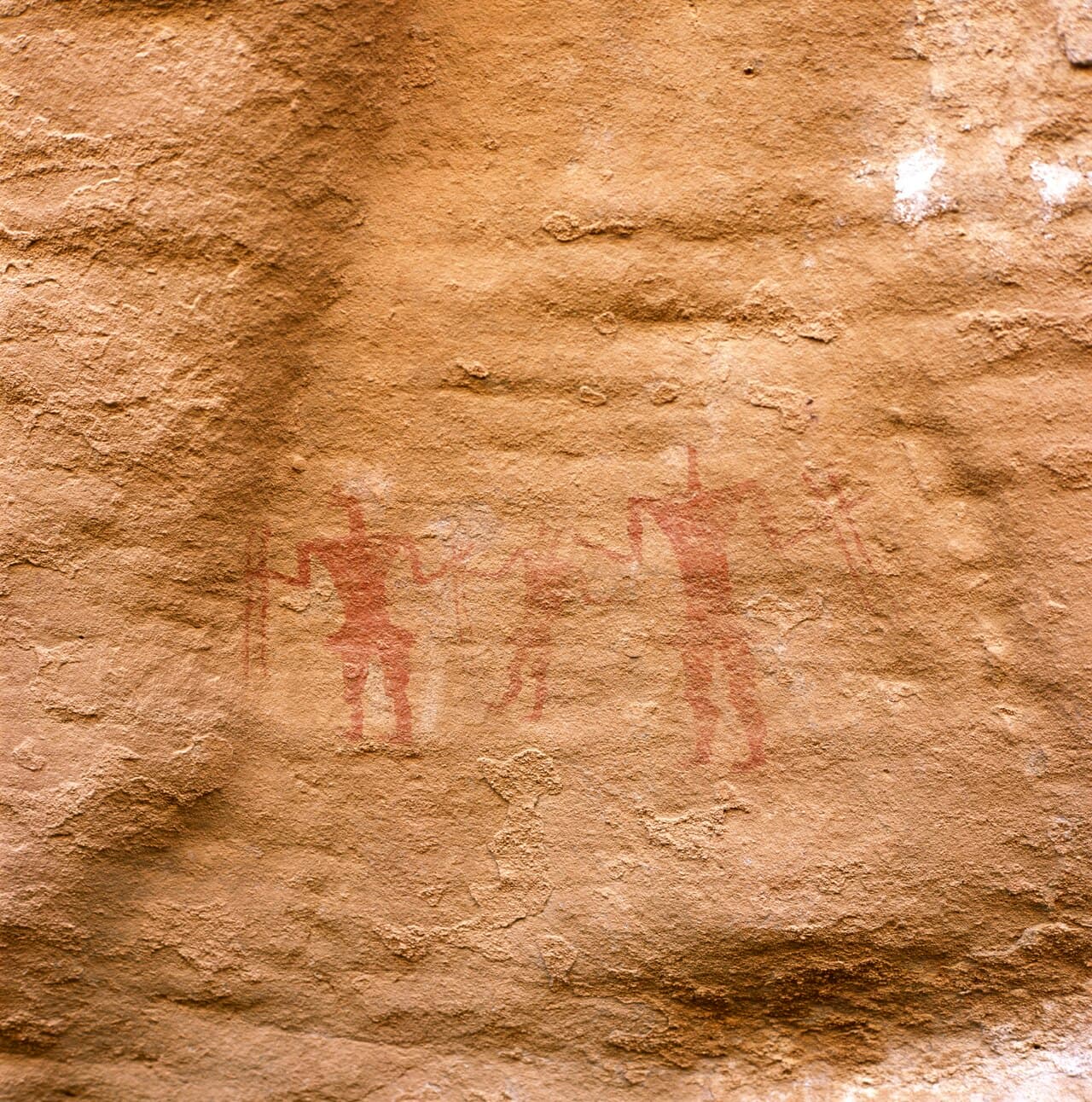
Photo : Yvon Fruneau (CC BY-SA 3.0 igo)
Located in southwestern Libya, this rock art site comprises numerous cave shelters and rock formations scattered across the Tadrart Acacus mountain range in the Sahara Desert. The shelters contain prehistoric rock paintings and engravings dating from the Neolithic period through the Pastoral era, documenting the region's climatic and cultural transformations. The artworks depict hunting scenes, pastoral activities, wildlife including giraffes and cattle, and human figures that reflect the evolution of human settlement in this formerly more humid landscape. The site's archaeological significance lies in its extensive record of human occupation and adaptation, providing evidence of the transition from hunter-gatherer to pastoral societies in the Sahara. The harsh desert environment has contributed to the preservation of these artistic expressions, making the site an important resource for understanding prehistoric North Africa. The rock formations themselves create a dramatic landscape characterized by natural shelters beneath vast overhanging rocks and cliff faces.
