Cultural
Zone protégée du Wadi Rum
Jordanie
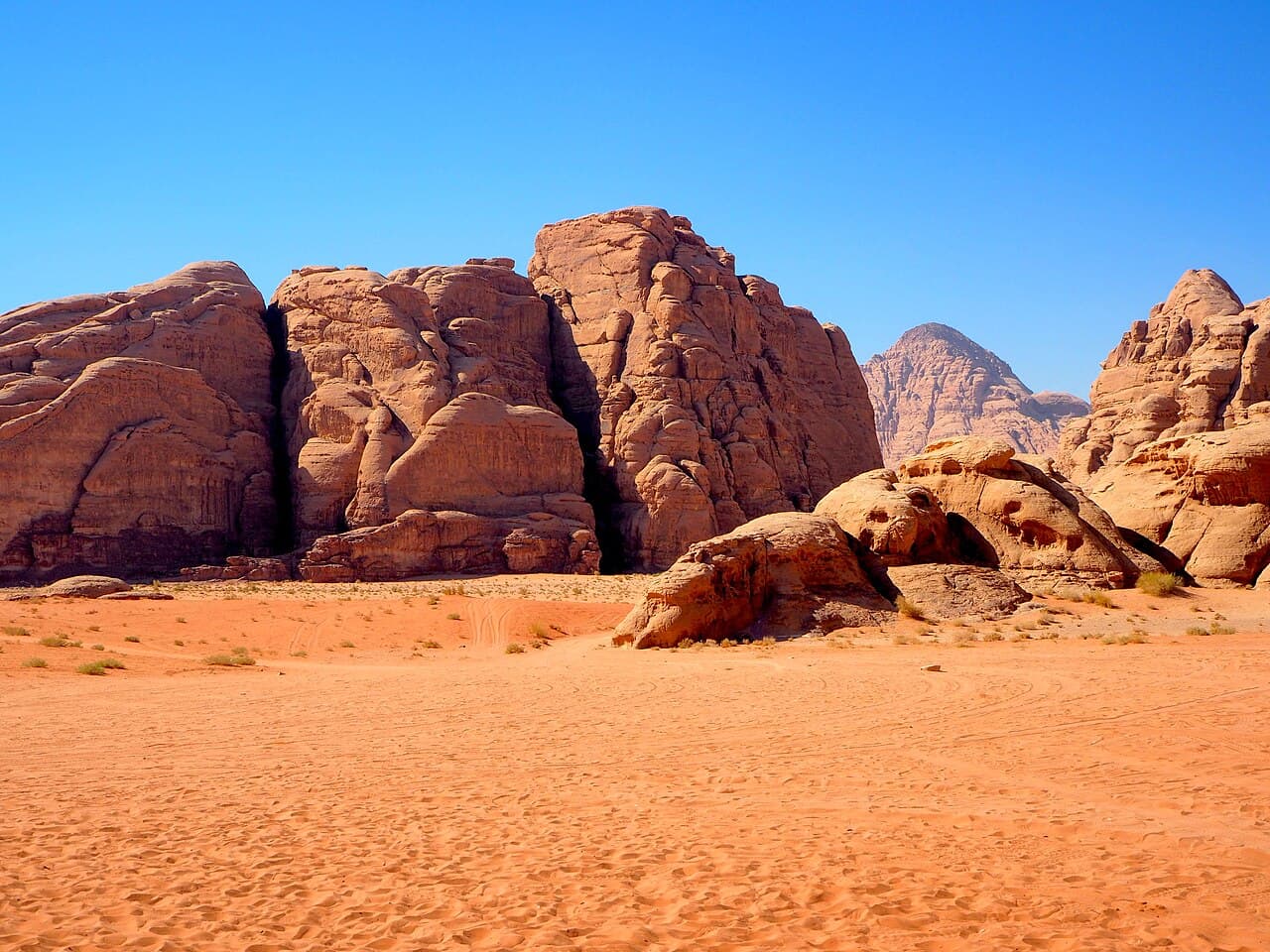
Located in southern Jordan, this protected zone encompasses a vast desert landscape characterized by towering sandstone and granite mountains interspersed with wide valleys. The site holds significant cultural value as a testimony to human habitation and Bedouin traditions spanning thousands of years, with evidence of ancient settlements, rock inscriptions, and archaeological remains scattered throughout the region. The dramatic geological formations, shaped by wind and water erosion, create distinctive red and ochre-colored cliffs and natural arches that define the visual character of the landscape. The Wadi Rum has served as a crucial crossroads for trade routes and as a refuge for various populations throughout history, including the Nabataeans and later Arab tribes. The site's cultural heritage is inseparable from the traditional way of life of the Bedouin communities who continue to inhabit the area, maintaining ancestral practices and knowledge systems tied to the desert environment. The combination of geological significance, archaeological importance, and living cultural traditions justifies its recognition as a protected cultural heritage zone.