Cultural
New Lanark
Royaume-Uni
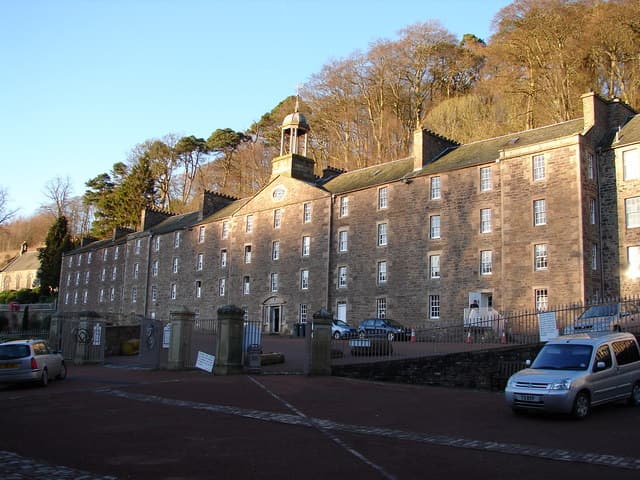
Photo : Ian Paterson (CC BY-SA 2.0)
Located in South Lanarkshire, Scotland, along the River Clyde, this historic cotton mill village represents a significant example of industrial heritage and social innovation from the late 18th and early 19th centuries. The site comprises a collection of stone buildings including worker housing, mills, schools, and other structures arranged around a planned village layout. New Lanark is recognized for its pioneering role in industrial management and labour practices, notably under the direction of Robert Owen, who introduced progressive working conditions and educational facilities for employees and their families. The architectural character of the site reflects the Georgian and early industrial aesthetic, with multi-storey mill buildings and terraced worker cottages constructed from local stone. The village's physical setting along the river remains relatively intact, preserving the relationship between industrial production, waterpower, and residential community planning. The site stands as evidence of the transition from rural to industrial society and the early experiments in welfare capitalism and social reform within the manufacturing industry.