Cultural
Vallée de Viñales
Cuba
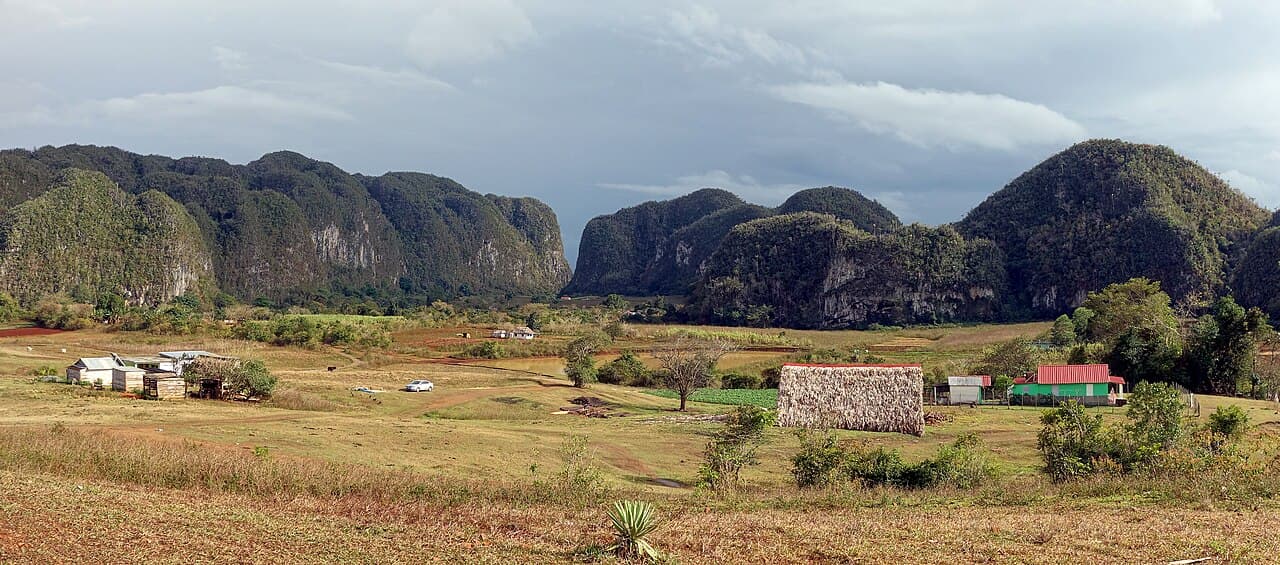
Photo : Velvet (CC BY-SA 4.0)
Located in the Pinar del Río Province of western Cuba, this cultural landscape comprises a valley system characterized by distinctive mogote formations—steep-sided, flat-topped limestone hills that rise abruptly from the valley floor. The site represents a significant example of traditional agricultural practices, particularly tobacco cultivation, which has shaped the region's economy and settlement patterns for centuries. The valley's cultural value derives from the preservation of traditional farming methods, vernacular architecture, and the continuing way of life of local communities who maintain historical land-use practices. The dramatic topography, combined with karst features including caves and underground rivers, creates a distinctive visual environment that reflects the interaction between natural geology and human land management. The area demonstrates the adaptive relationship between the local population and their environment, with agricultural terraces and traditional farm buildings integrated into the landscape. This integration of natural features with sustained cultural practices justifies the site's recognition as a cultural landscape of international significance.