Cultural
Le précipice à bisons Head-Smashed-In
Canada
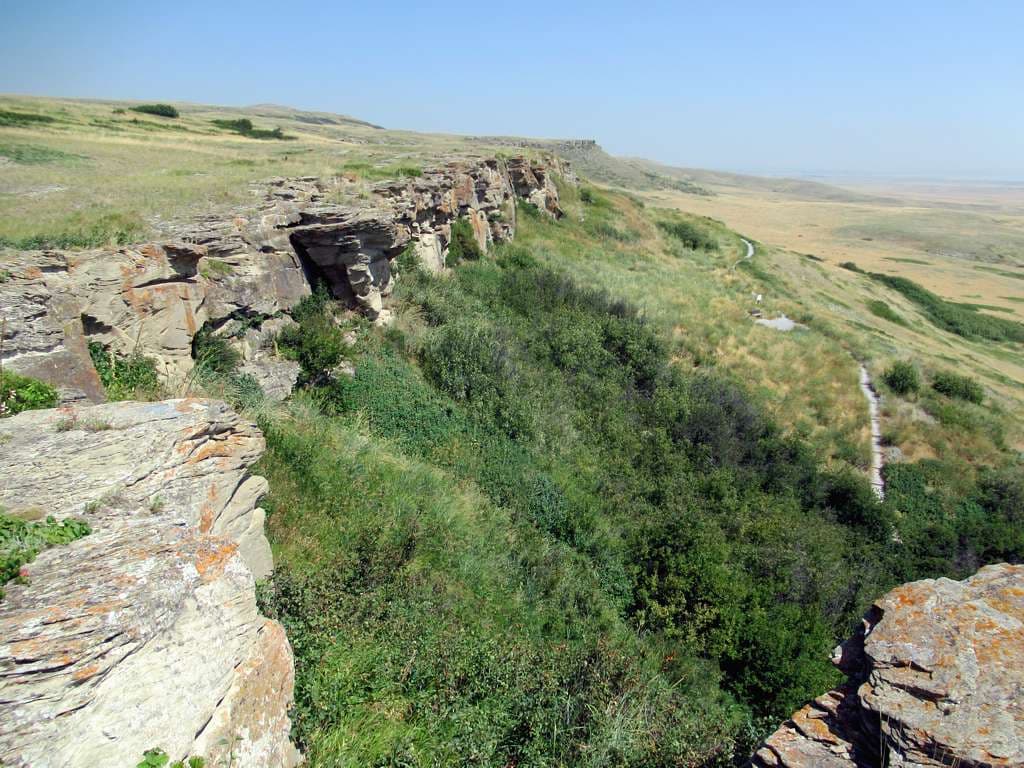
Photo : David Stanley from Nanaimo, Canada (CC BY 2.0)
Located in southwestern Alberta, Canada, this archaeological site preserves evidence of a traditional Indigenous hunting practice spanning nearly 6,000 years. The site contains a natural cliff formation that was strategically used by Plains peoples to drive bison herds to their deaths, providing sustenance and materials for communities in the region. The landscape features a steep precipice overlooking a valley floor where animal remains accumulated over centuries, creating distinctive bone beds that document sustained hunting activities. Excavations have revealed layers of bone, stone tools, and other artifacts that illustrate the sophisticated hunting techniques and cultural practices of Plains Indigenous peoples. The site's name reflects both its historical function and its significance in understanding pre-contact Indigenous lifeways on the North American Great Plains. The combination of geological features, archaeological deposits, and documented Indigenous history establishes its importance as a testament to human adaptation to the prairie environment.