Natural
Parc national d'Uluru-Kata Tjuta
Australie
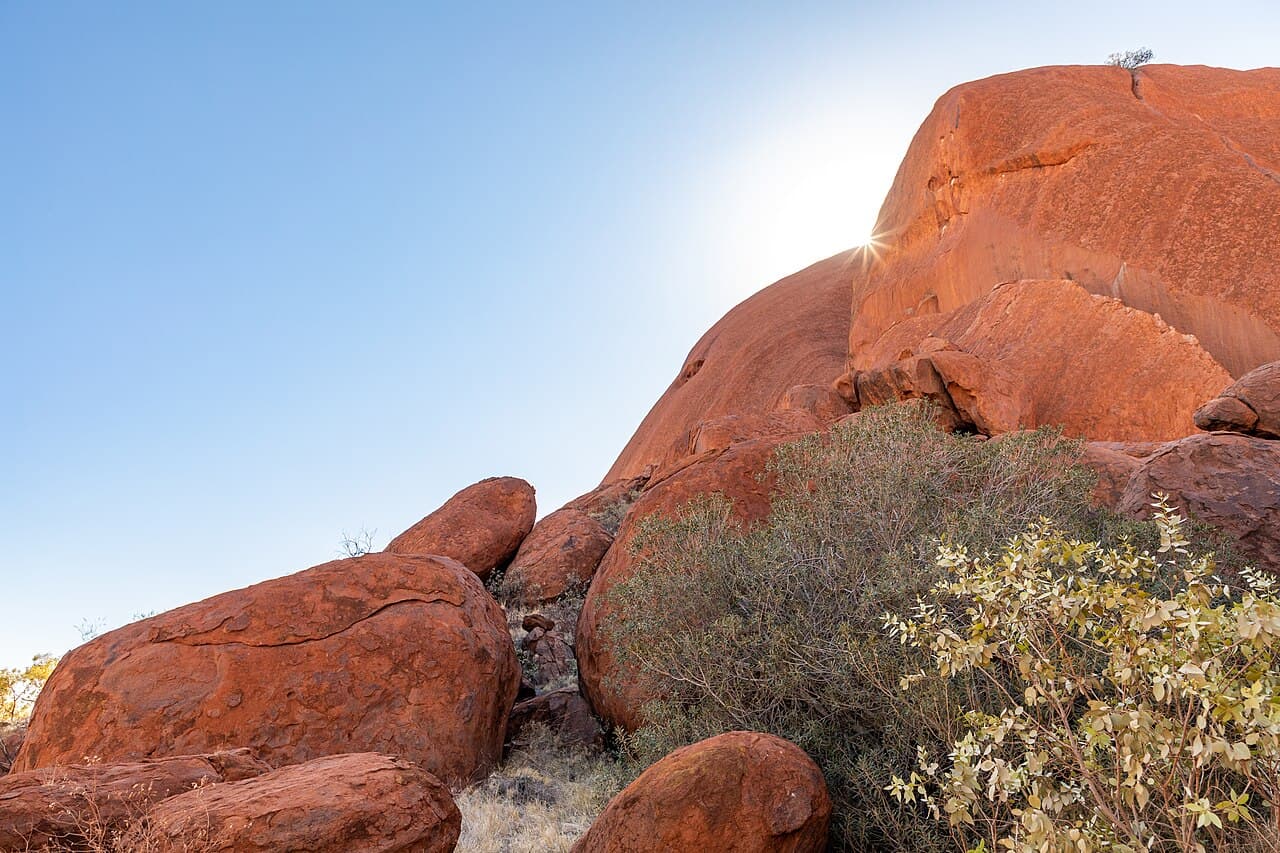
Photo : Dietmar Rabich (CC BY-SA 4.0)
Located in central Australia's Northern Territory, this national park encompasses two major geological formations that hold profound significance for the Anangu people, the traditional owners of the land. Uluru, a large sandstone monolith, and Kata Tjuta, a group of striking rock domes, represent distinctive geological features formed over millions of years and are central to the region's natural and cultural heritage. The site was inscribed as a UNESCO World Heritage property recognising both its outstanding natural values and its exceptional cultural significance to Indigenous Australians, whose connection to the land extends back many thousands of years. The landscape is characterised by dramatic red rock formations that appear to change colour with shifting light, set within an arid environment of sparse vegetation and open plains. The park serves as a meeting place where geological wonders intersect with Indigenous cultural practices, traditions, and spiritual beliefs that continue to be maintained by the Anangu people. Management of the site reflects a commitment to both conservation of the natural environment and respect for Indigenous authority and knowledge systems.