Cultural
Quebrada de Humahuaca
Argentine
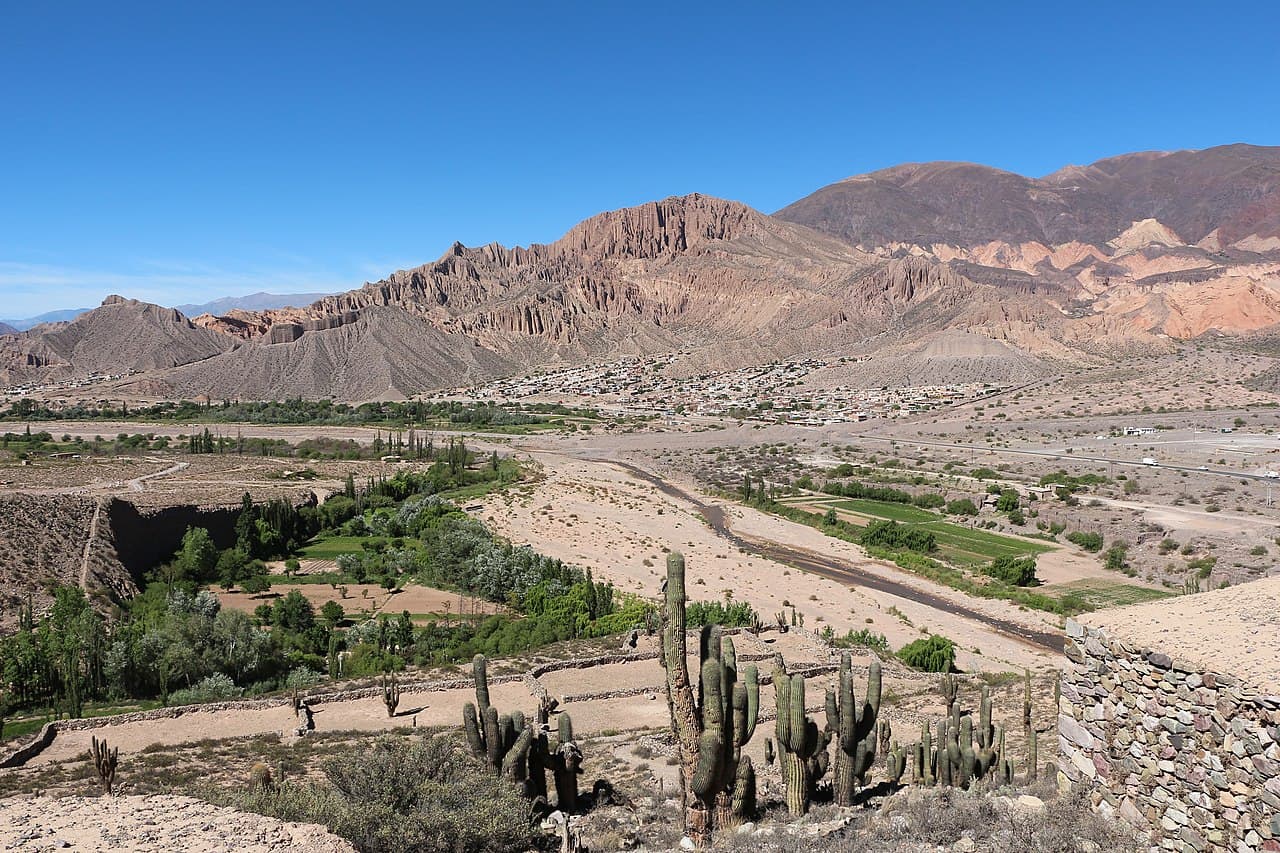
Photo : Bernard Gagnon (CC BY-SA 4.0)
Located in the Jujuy Province of northwestern Argentina, this cultural landscape encompasses a mountainous valley formed by the Río Grande. The site represents a continuous human occupation spanning from pre-Columbian times through the colonial period to the present day, with evidence of indigenous settlements, Spanish colonial towns, and agricultural terracing systems that have shaped the region for centuries. The valley's distinctive geography, characterized by steep ravines and high-altitude terrain, created natural conditions that fostered the development of unique settlement patterns and farming practices adapted to the challenging environment. The architectural heritage includes colonial-era towns with traditional building styles, religious structures, and archaeological remains that document the interaction between indigenous populations and Spanish colonization. The Quebrada de Humahuaca exemplifies how cultural practices, settlement strategies, and landscape modifications have been continuously developed and maintained within a specific geographical context. This integration of natural landscape with human cultural development over an extended historical period constitutes the basis for its recognition as a cultural heritage site of outstanding value.