Natural
Parc national du Grand Canyon
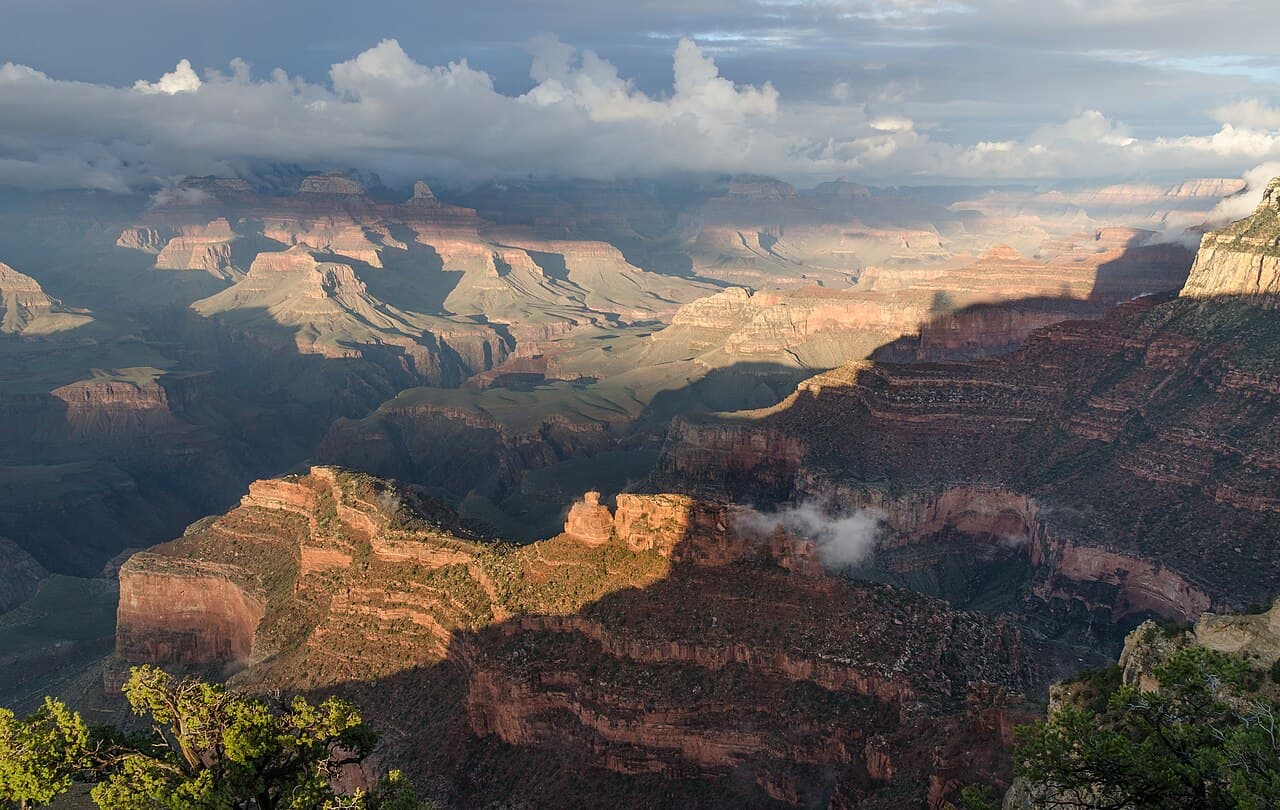
Photo : Tuxyso (CC BY-SA 3.0)
Located in northwestern Arizona, this expansive national park encompasses one of the world's most significant geological formations. The Grand Canyon reveals nearly two billion years of geological history through its exposed rock layers, providing exceptional scientific value for understanding Earth's structural evolution and the processes of erosion. The site's distinctive visual character is defined by its vast system of canyons carved by the Colorado River, creating dramatic variations in topography, colour, and landscape features. The park's natural environment supports diverse ecosystems across multiple elevation zones, from desert regions at lower elevations to forest habitats at higher altitudes. The combination of its geological significance, scale, and relatively intact natural state justified its recognition as a natural world heritage site. The Grand Canyon remains an important location for geological research and education, attracting continued scientific study of its stratigraphic sequences and erosional systems.