Natural
Parc national de Yellowstone
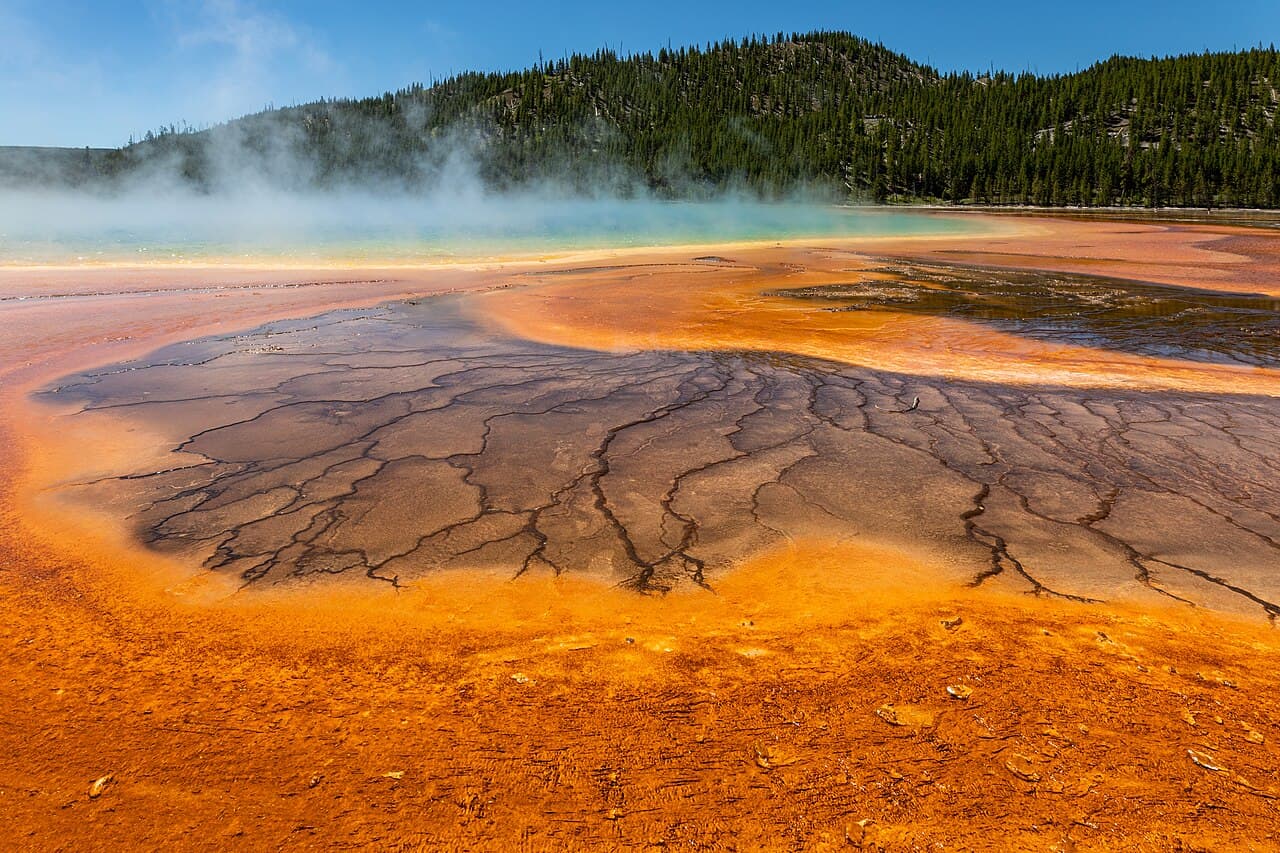
Photo : Dietmar Rabich (CC BY-SA 4.0)
Located in the northwestern United States, primarily spanning Wyoming, Montana, and Idaho, Yellowstone National Park is a vast protected natural area renowned for its exceptional geothermal features. The park's most distinctive characteristic is the presence of numerous hot springs, geysers, and colorful thermal pools, including the famous Old Faithful geyser, which results from the underlying volcanic activity and hydrothermal systems. Yellowstone sits atop a volcanic hotspot and contains a significant portion of the world's geysers, making it a site of considerable geological importance. The park encompasses diverse ecosystems including forests, canyons, and the Grand Canyon of the Yellowstone, characterized by striking yellow and orange rock formations. The natural heritage of Yellowstone includes abundant wildlife such as bison, elk, grizzly bears, and wolves, representing one of the largest intact ecosystems in the temperate zone. These combined features—the geothermal phenomena, geological significance, and ecological diversity—establish Yellowstone as a site of outstanding universal value for natural heritage preservation.