Cultural
La culture chaco
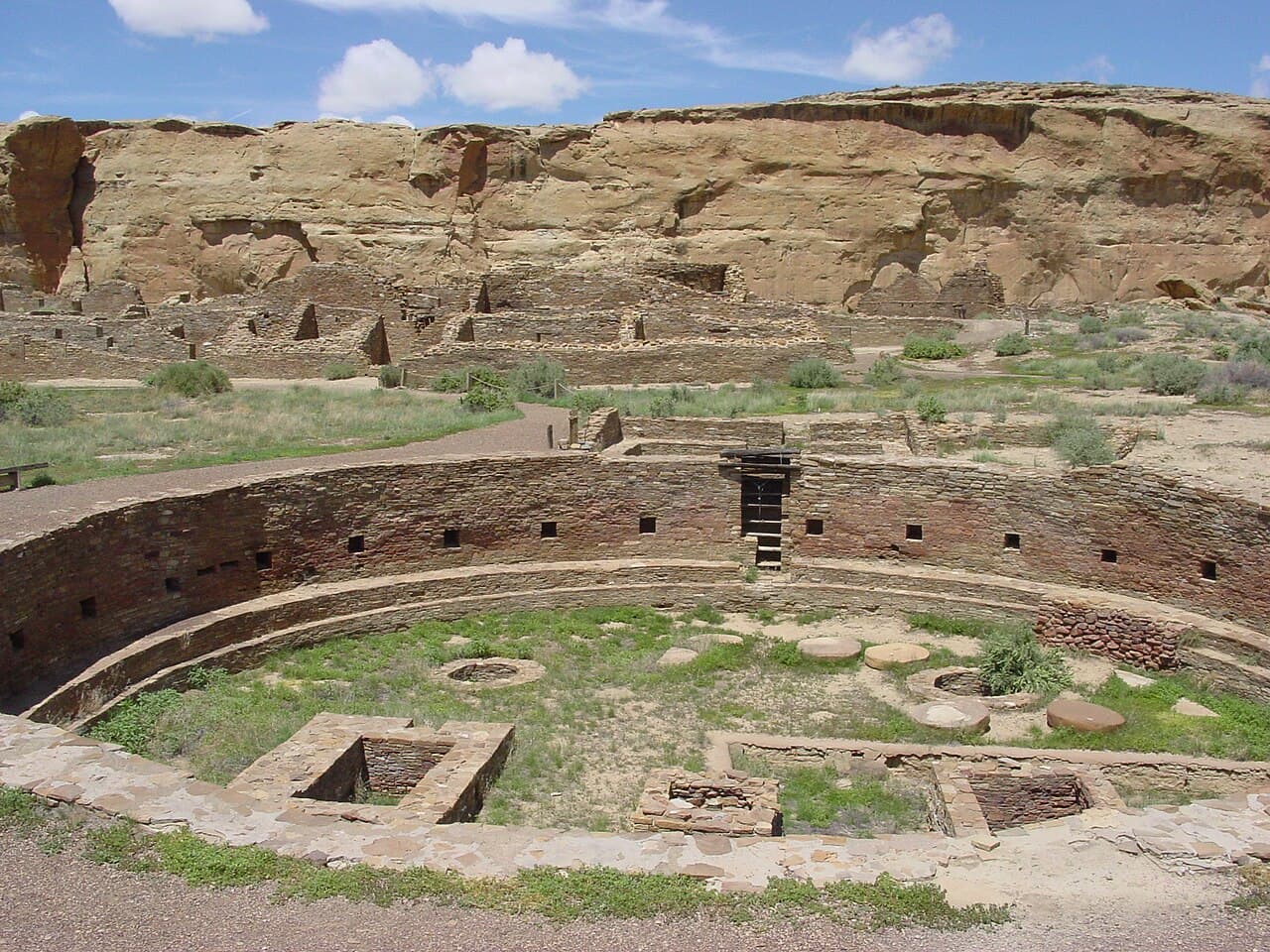
The Chaco culture represents a significant pre-Columbian archaeological phenomenon centered in the San Juan Basin of the American Southwest, spanning present-day New Mexico, Colorado, Utah, and Arizona. This cultural tradition, which flourished between approximately 900 and 1250 CE, is characterized by distinctive great houses, roads, and settlement patterns that demonstrate sophisticated planning and organization. Chaco Canyon, located in northwestern New Mexico, serves as the primary archaeological center where monumental structures and extensive road networks provide evidence of a complex society engaged in trade, ceremony, and resource management. The site's visual hallmark consists of multi-story stone pueblos, including Pueblo Bonito, featuring distinctive architectural elements such as precisely aligned walls and standardized construction techniques. The broader Chaco cultural region shows evidence of far-reaching connections through trade networks and the distribution of distinctive pottery and other artifacts across vast distances. The archaeological remains document an important chapter in Native American history and provide insight into pre-Columbian settlement patterns and social organization in the arid American Southwest.