Cultural
Site archéologique de Troie
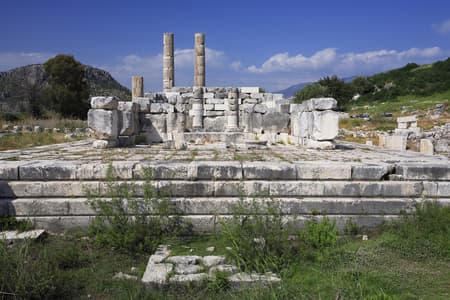
Located in northwestern Turkey near the Dardanelles Strait, this archaeological site encompasses the remains of multiple ancient cities built successively on the same location over more than three thousand years. The site is renowned for its connection to Homer's Iliad and the legendary Trojan War, though the historical relationship between the literary account and the archaeological evidence remains subject to scholarly debate. The excavated layers reveal a complex stratigraphy demonstrating the development of urban settlements from the Early Bronze Age through the Hellenistic and Roman periods. The site's significance lies in its documentation of cultural exchange and interaction between Anatolia and the Mediterranean world, with material evidence including defensive walls, residential structures, and artifacts that illustrate the evolution of civilization in this region. The remains of the classical city, including a theatre and temple structures, are visible within the broader landscape of earlier Bronze Age fortifications. This archaeological ensemble provides substantial evidence for understanding settlement patterns, architectural practices, and cultural developments across multiple historical periods.