Cultural
Ville-église de Gammelstad, Luleå
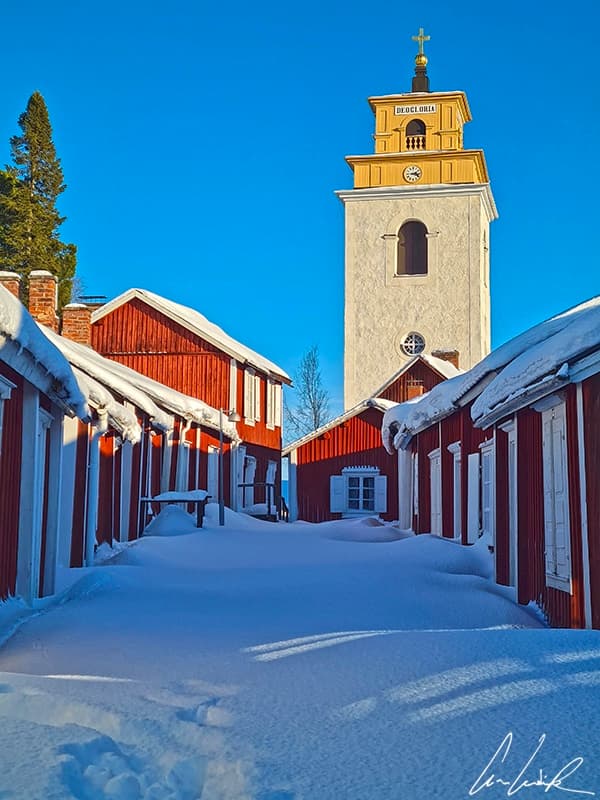
Located in northern Sweden near Luleå, this site represents a distinctive form of church village that developed in Scandinavian communities during the medieval period. Gammelstad comprises a wooden church surrounded by a densely packed settlement of small cottages, which served as temporary residences for parishioners who traveled considerable distances for religious services and gatherings. The architectural ensemble reflects the practical organization of rural religious life, with the church at its center and the cottage village arranged in a structured pattern around it. The wooden buildings, constructed according to regional building traditions, demonstrate the material culture and settlement patterns characteristic of northern European communities. This cultural landscape is significant as an exceptionally well-preserved example of a church village, illustrating the historical relationship between religious practice, social organization, and spatial planning in pre-industrial Scandinavia. The site provides valuable evidence of how communities organized themselves around ecclesiastical centers before modern transportation and urbanization transformed settlement patterns.