Cultural
Paysages de la Dauria
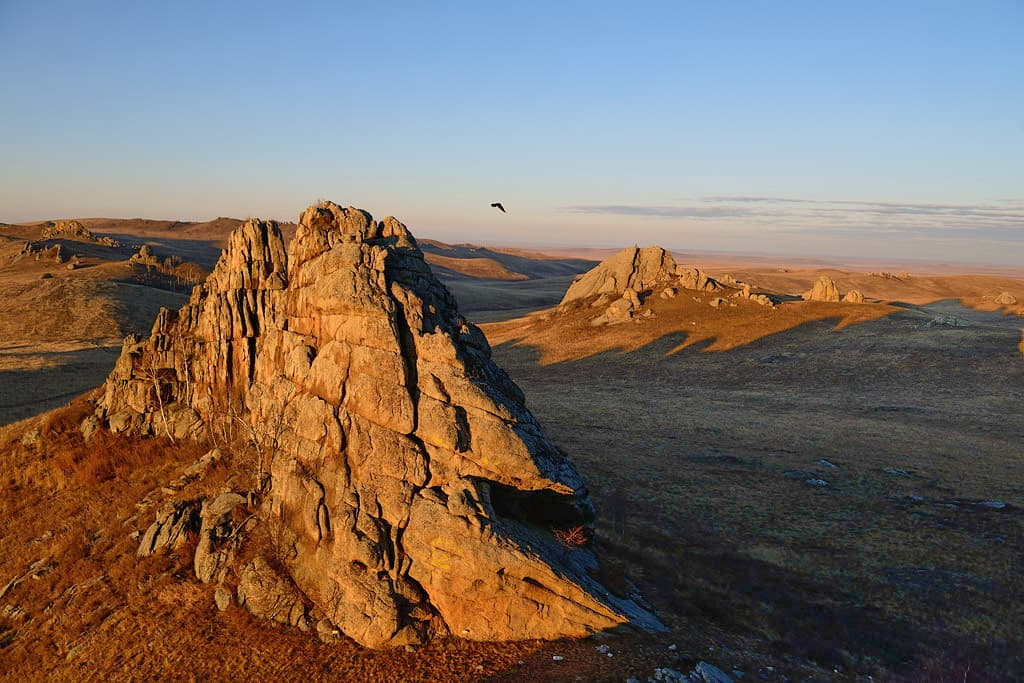
Photo : Игорь Шпиленок (CC BY-SA 3.0)
Located in southeastern Russia, this cultural landscape represents the traditional land use patterns and settlement structures of the Dauria region, a vast steppe environment spanning the Russia-Mongolia border. The site encompasses areas that have been shaped by centuries of interaction between nomadic pastoral communities and the natural environment, reflecting distinctive patterns of habitation and resource management. The landscapes preserve evidence of historical settlement systems, including ancient fortifications and archaeological remains that document human occupation across different periods. The Dauria region is characterized by its continental climate and open steppe terrain, which has influenced both the cultural practices and architectural traditions visible throughout the site. The inscription recognizes the site's value in demonstrating the relationship between traditional land use systems and the preservation of both cultural heritage and biodiversity in this frontier region. The site provides significant insights into the historical processes of human adaptation to steppe environments and cross-border cultural exchanges in East Asia.