Cultural
Centre historique de la ville d’Arequipa
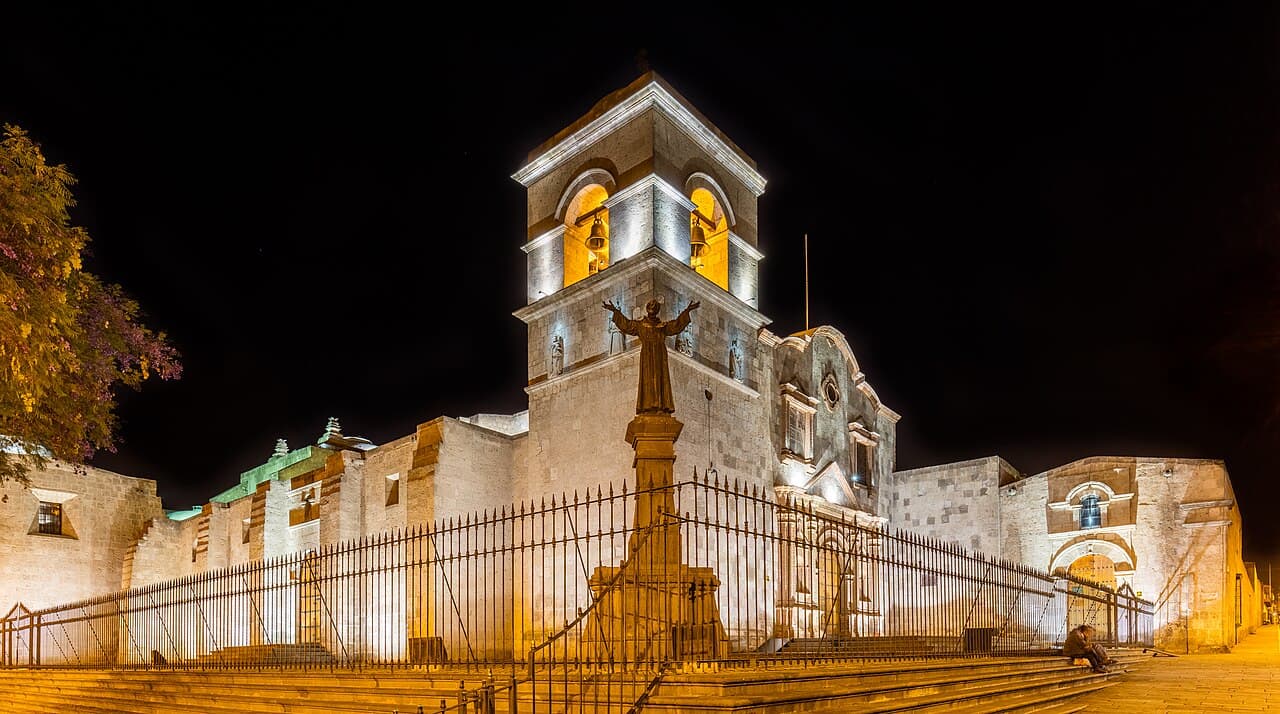
Photo : Diego Delso (CC BY-SA 4.0)
Located in southern Peru at an elevation of approximately 2,300 meters, the historic centre of Arequipa constitutes an outstanding example of Spanish colonial urban planning adapted to a mountainous landscape. The city was founded in the 16th century and developed as an important administrative and commercial hub, which is reflected in its architectural heritage. The urban layout and buildings are characterised by the extensive use of white volcanic stone (sillar), a material quarried locally that gives the city its distinctive appearance and earned it the nickname "White City." The centre contains numerous religious and civic structures dating from the colonial period through the 19th century, including the Cathedral, convents, and residential buildings that exemplify various architectural styles. This assemblage of architecture, urban design, and cultural significance prompted its inscription as a UNESCO World Heritage Site, recognising its importance as a testimony to Spanish colonial settlement in the Andes and its continued role as a major city in the region.