Cultural
Bagan
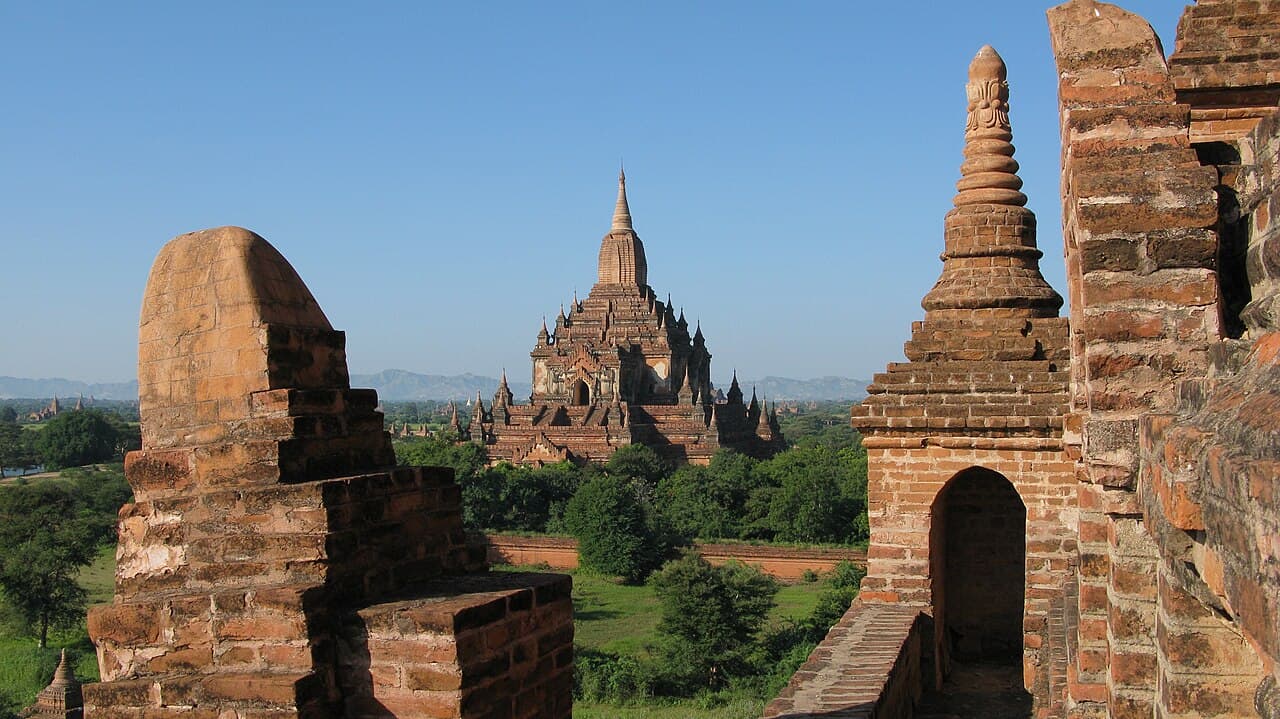
Photo : Vyacheslav Argenberg (CC BY 4.0)
Located in the dry plains of central Myanmar, this archaeological zone encompasses the remains of numerous Buddhist temples, stupas, and monasteries spanning several centuries of construction. The site represents one of Southeast Asia's most significant concentrations of religious architecture, reflecting the region's historical importance as a major center of Buddhist civilization. The monuments were built primarily during the 11th to 13th centuries under successive Myanmar kingdoms, though occupation of the area extends both before and after this period. The architectural styles and inscriptions found throughout the site provide substantial evidence of cultural and religious development in mainland Southeast Asia during the medieval period. The landscape is characterized by thousands of brick and stone structures of varying scales, from modest shrines to elaborate temples with decorated surfaces, distributed across the expansive terrain. This density and diversity of surviving Buddhist monuments justify recognition of Bagan's outstanding cultural and historical value.