Cultural
Umm Al-Jimāl
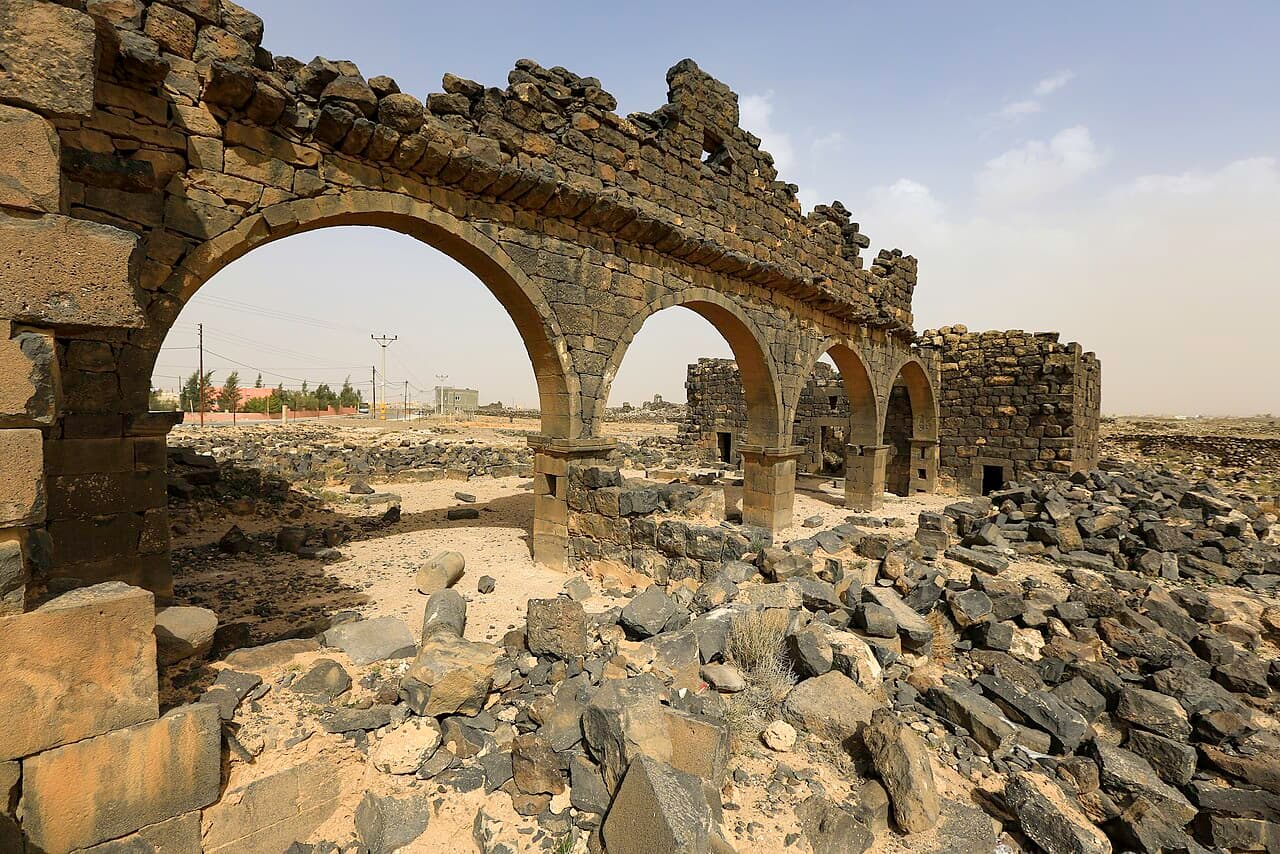
Photo : Bashar Tabbah (CC BY-SA 4.0)
This archaeological site in northeastern Jordan preserves the remains of a Roman and Byzantine settlement dating from the 1st to 8th centuries CE. Built from black basalt stone characteristic of the region, Umm Al-Jimāl represents an important example of urban development in the Syrian-Arabian borderlands during late antiquity. The settlement features residential structures, churches, and administrative buildings that demonstrate the architectural traditions and construction techniques of the period. Its location on a strategic plateau provided control over trade routes connecting the Mediterranean world with Arabia and Mesopotamia. The site's exceptional preservation, with numerous buildings still standing to considerable heights, offers valuable insights into daily life, religious practices, and economic activities in a frontier region of the Byzantine Empire. The distinctive black basalt construction and the layout of the settlement reflect both local building traditions and broader Greco-Roman urban planning principles.