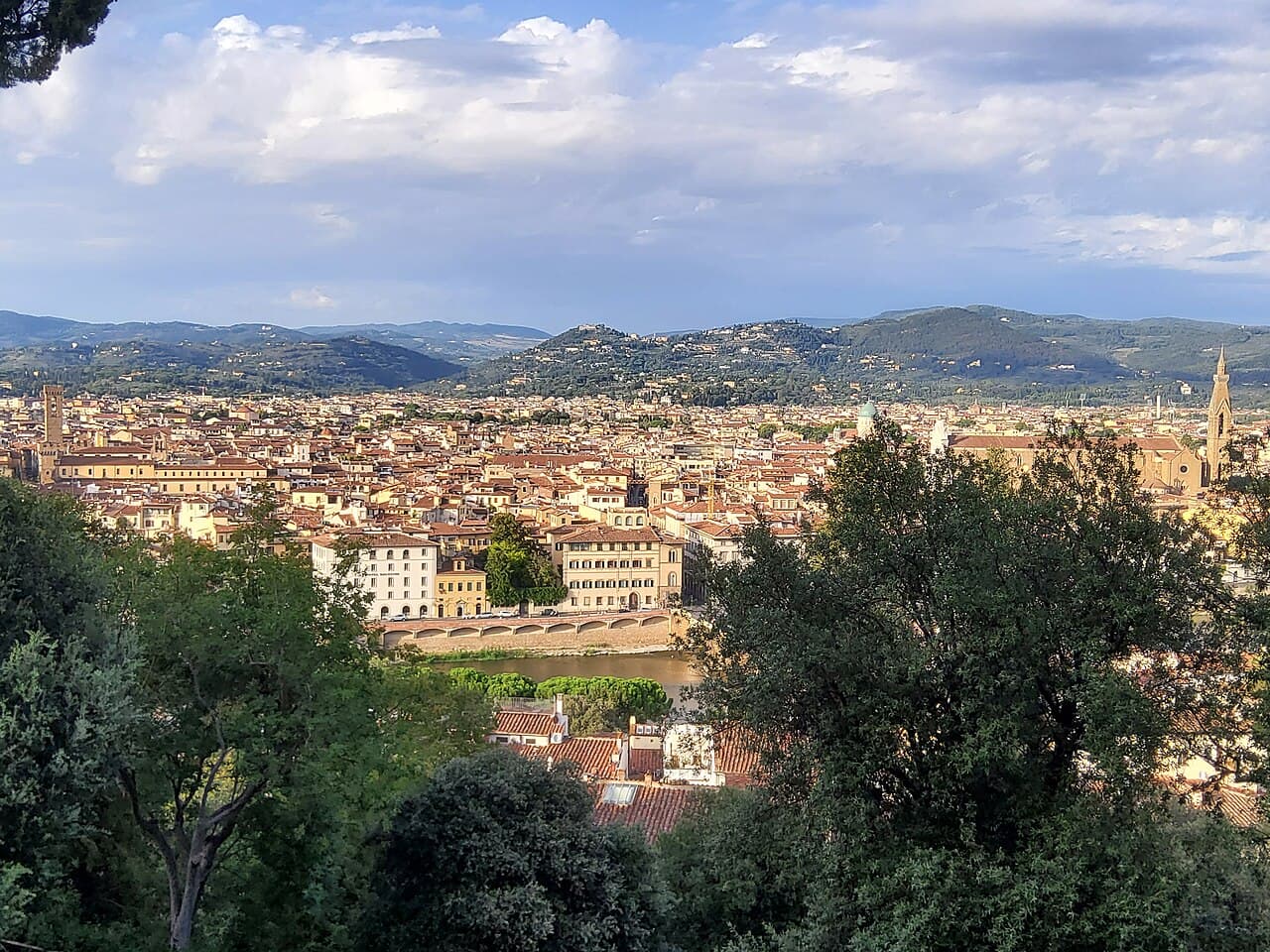
Photo : Benoit Soubeyran (CC BY-SA 4.0)
Historic Centre of Florence
Florence
Situated in central Italy along the Arno River, Florence served as the principal centre of the Italian Renaissance and represents a decisive turning point in European artistic and architectural development. The historic centre preserves an exceptional urban fabric that reflects the city's evolution from medieval times through the Renaissance, with its street layout, public spaces, and building patterns largely maintained from earlier periods. The site encompasses masterworks of Renaissance architecture and art, including the Florence Cathedral with its distinctive dome designed by Filippo Brunelleschi, the Palazzo della Signoria, and numerous churches, palaces, and civic buildings that showcase innovations in construction techniques and aesthetic principles. The concentration of artistic and intellectual achievements within this compact urban area, combined with the survival of its historic structure and the density of significant monuments, justified its inscription in 1982 as a property of outstanding universal value. The visual character of the centre is defined by the harmonious integration of civic, religious, and residential buildings constructed primarily in stone and terracotta, reflecting the stylistic evolution from Romanesque through High Renaissance periods. Florence's historic centre remains a document of urban planning principles and artistic developments that profoundly influenced European culture.