Cultural
Le Taj Mahal
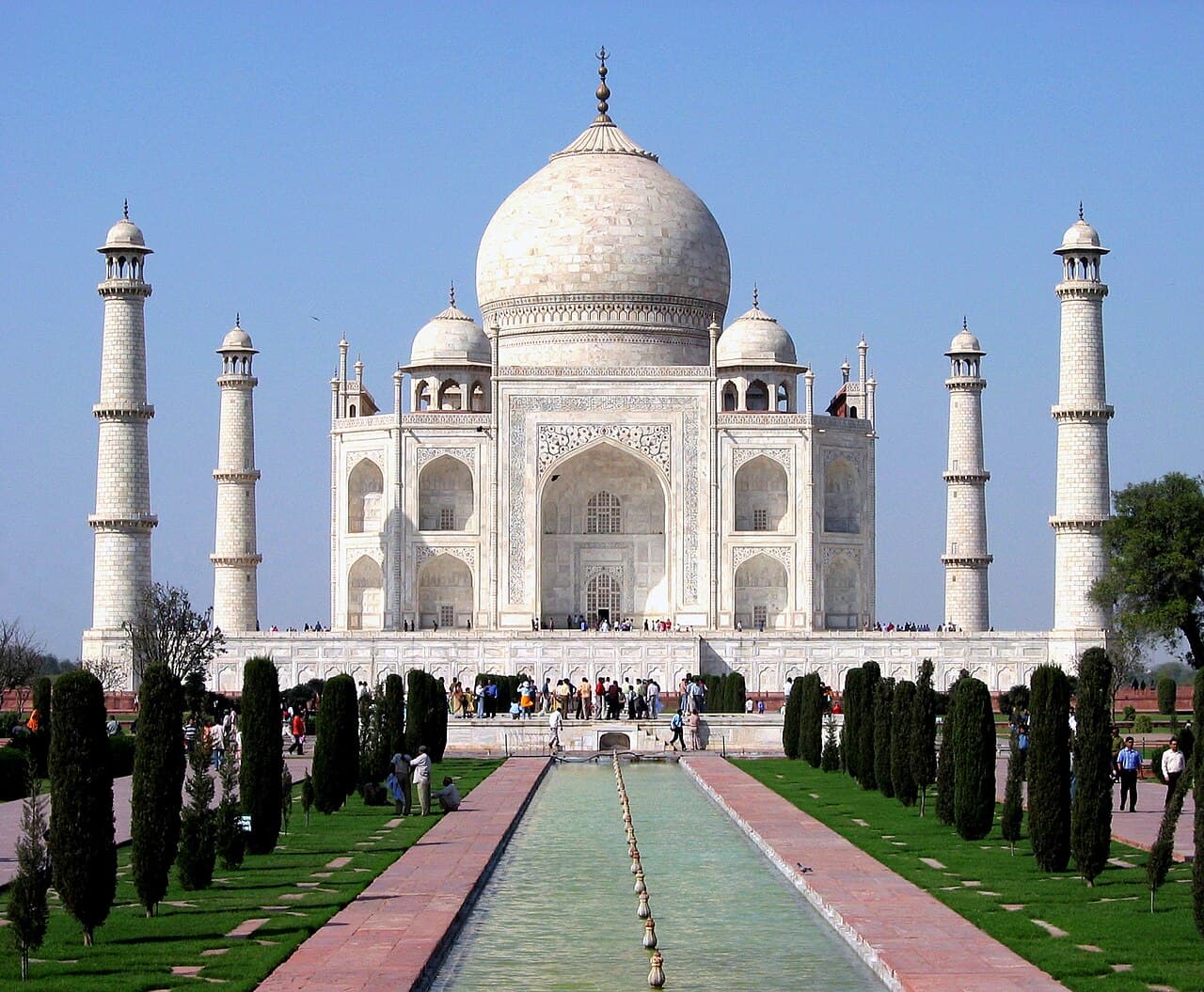
Photo : Dhirad, picture edited by J. A. Knudsen (CC BY-SA 3.0)
Built in Agra, India, this white marble mausoleum represents a masterpiece of Mughal architecture, combining elements from Persian, Islamic, and Indian architectural traditions. Constructed as a tomb for Mumtaz Mahal, the wife of Emperor Shah Jahan, the monument exemplifies the artistic and technical achievements of the Mughal period. The site comprises a main mausoleum, a mosque, a guest house, and extensive gardens laid out in the Mughal tradition, all enclosed within a fortified boundary. The structure is notable for its precise proportions, intricate marble inlay work featuring semi-precious stones, and its symmetrical composition reflected in its formal garden setting. Situated on the banks of the Yamuna River, the site has been recognized as one of the finest examples of Mughal architecture and continues to be among the most significant cultural monuments in India. Its exceptional craftsmanship, architectural innovation, and historical importance have made it a subject of considerable scholarly and artistic interest.