Cultural
Jantar Mantar, Jaipur
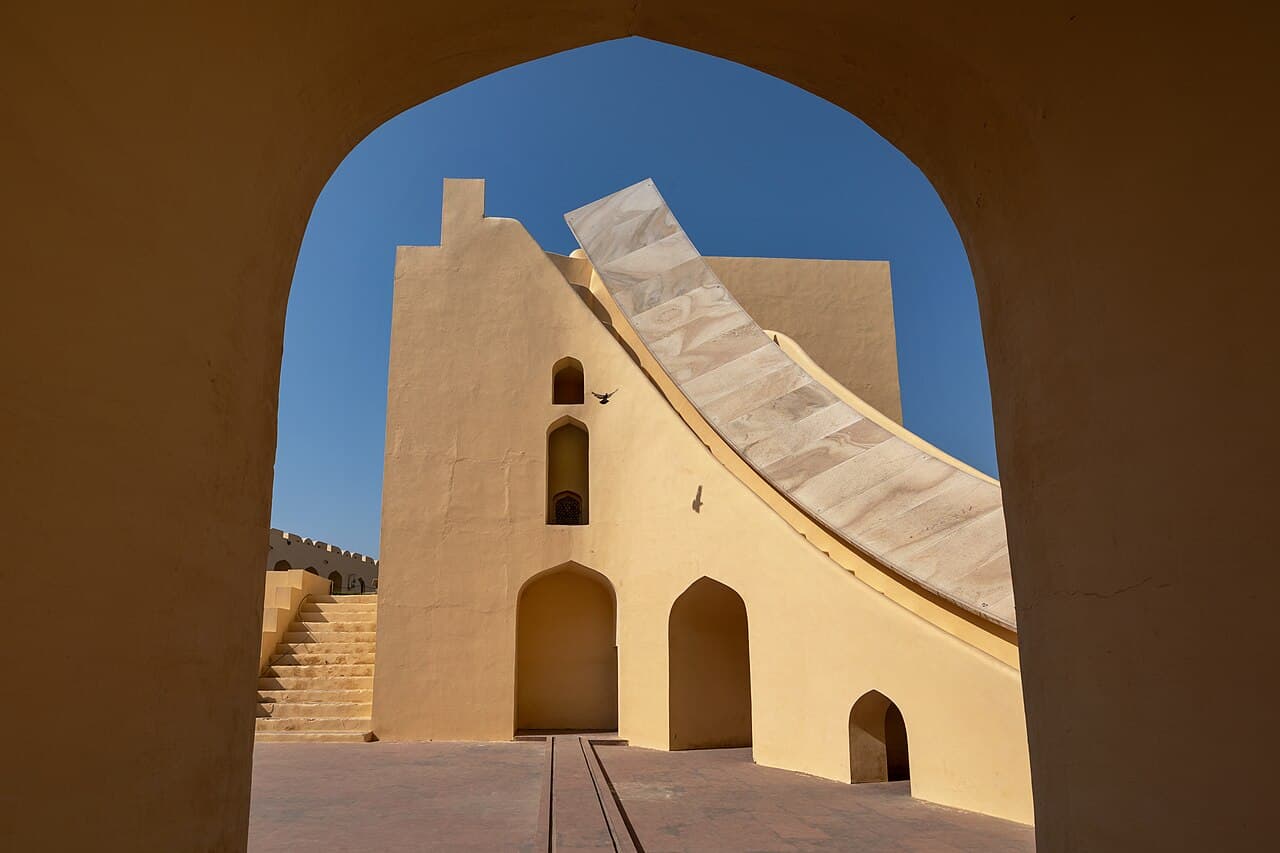
Photo : Sudipta Maulik (CC BY-SA 4.0)
This astronomical observation site in Jaipur, India, was built in the early 18th century by Maharaja Sawai Jai Singh II and represents a significant achievement in astronomical and mathematical science. The site comprises a collection of architectural astronomical instruments constructed from stone and marble, designed to measure time, predict eclipses, and track celestial bodies. Located in the heart of Jaipur's old city, Jantar Mantar demonstrates the sophisticated understanding of astronomy and mathematics prevalent in medieval India, blending ancient Indian, Islamic, and European astronomical practices. The visual character of the site is defined by its distinctive geometric structures, including the largest stone sundial in the world, which continue to function with remarkable accuracy. The ensemble reflects the scientific patronage of its founder and remains an important testament to the advancement of astronomical knowledge in South Asia.