Cultural
Ensemble monumental de Khajuraho
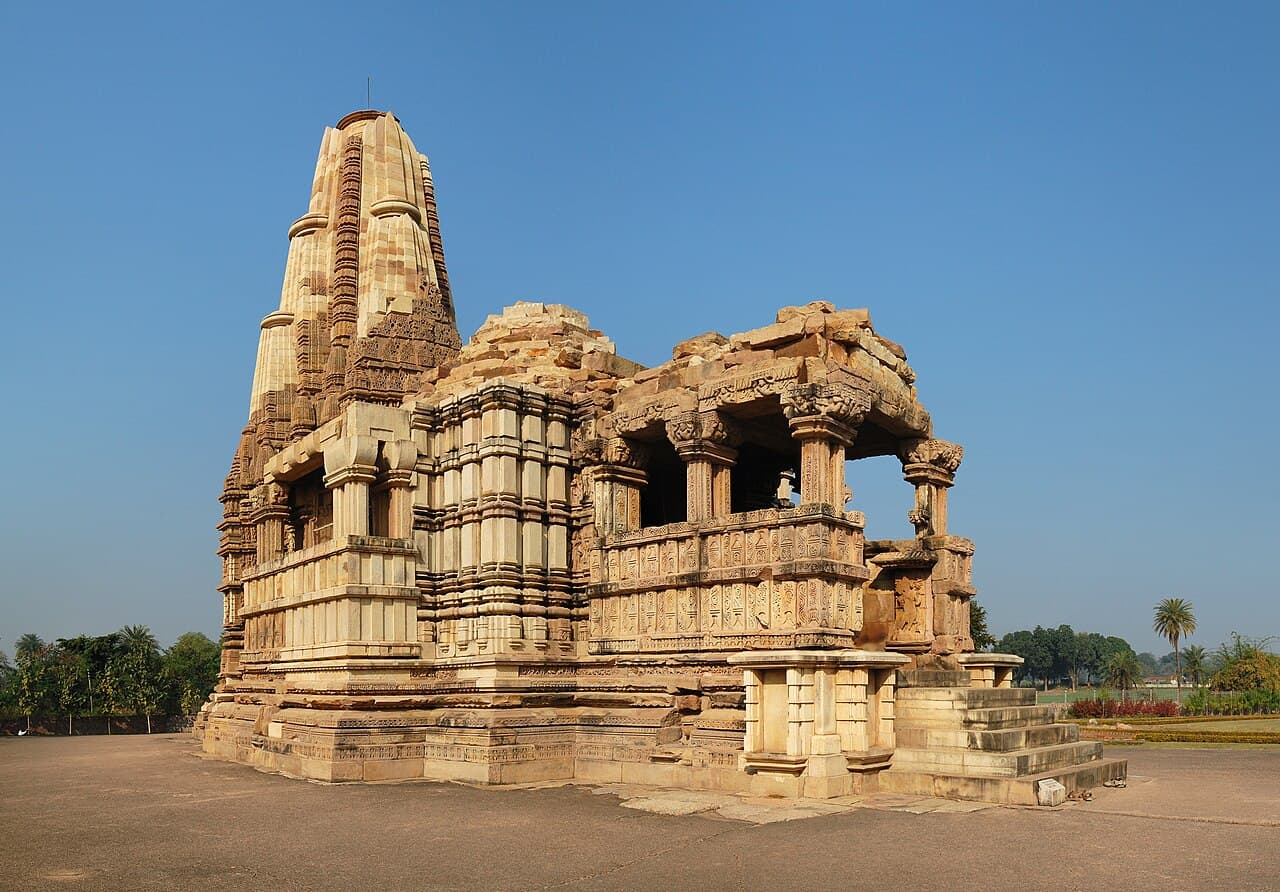
Photo : Marcin Białek (CC BY-SA 4.0)
Located in central India, the monumental ensemble of Khajuraho comprises a group of Hindu and Jain temples constructed between the 10th and 11th centuries. The temples represent a remarkable architectural achievement of the Chandella dynasty period, showcasing a distinctive regional style that combines intricate sculptural decoration with sophisticated structural design. The site is characterised by its temples built on elevated platforms, featuring elaborately carved sandstone and intricate stone ornamentation that covers walls, pillars, and exterior surfaces. The sculptural programme includes depictions of deities, celestial beings, and scenes of daily life, notably including erotic imagery that reflects the temple decoration conventions of medieval India. Originally comprising a larger ensemble, only about twenty temples survive today at the site. The architectural and artistic qualities of Khajuraho, along with its historical significance as a testament to the cultural and religious practices of medieval Hindu and Jain societies, form the basis for its recognition as a cultural heritage site.