Mixed
Paysage culturel de la province de Bali : le système des subak en tant que manifestation de la philosophie du Tri Hita Karana
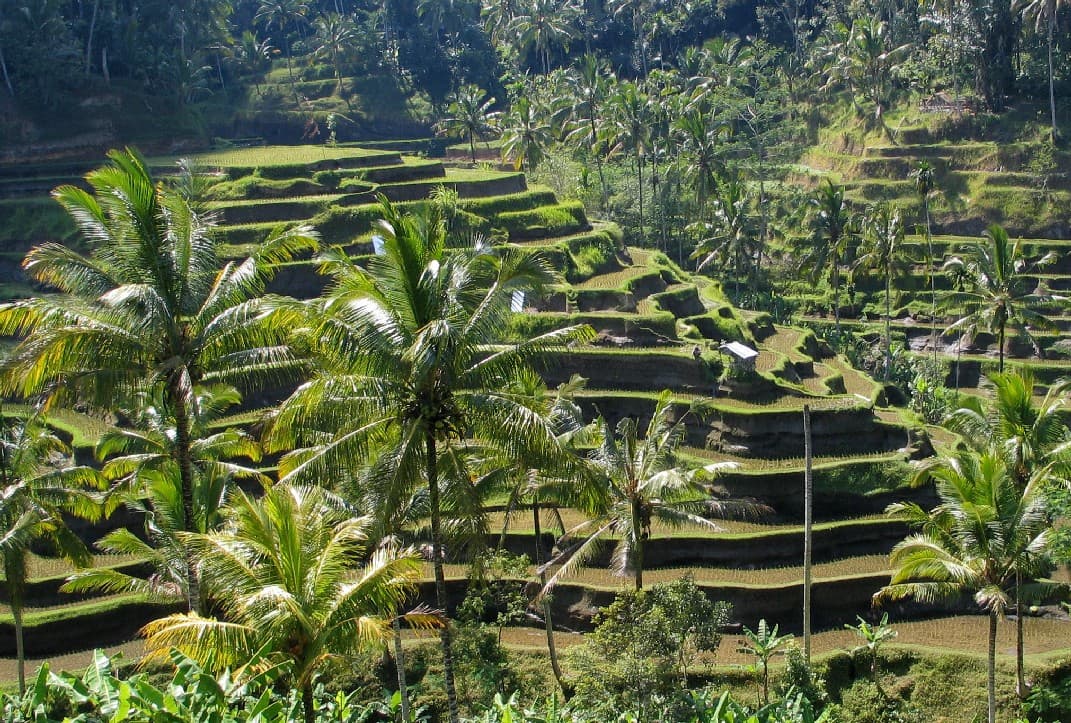
Photo : Auteur inconnu (CC BY-SA 3.0)
The cultural landscape of Bali's province represents a distinctive agricultural system known as subak, which reflects the traditional Balinese philosophy of Tri Hita Karana—the belief in the harmonious relationship between humans, nature, and the divine. This irrigation system, developed over centuries, demonstrates sophisticated water management techniques organized through cooperative social structures that extend beyond purely agricultural functions to encompass spiritual and cultural dimensions. The landscape comprises interconnected rice terraces, water temples, and irrigation networks that collectively form a unified system of land and water use across Bali's topography. The subak system qualifies for UNESCO recognition as a mixed heritage site due to its integration of outstanding natural features with cultural and social practices that have been maintained through generations. The visual character of the landscape is marked by the distinctive stepped rice paddies that cascade across hillsides, interspersed with temples and water channels that direct monsoon and spring water for irrigation. This site exemplifies how traditional knowledge systems can create sustainable agricultural practices while maintaining deep cultural and spiritual significance within a living community.