Cultural
Délos
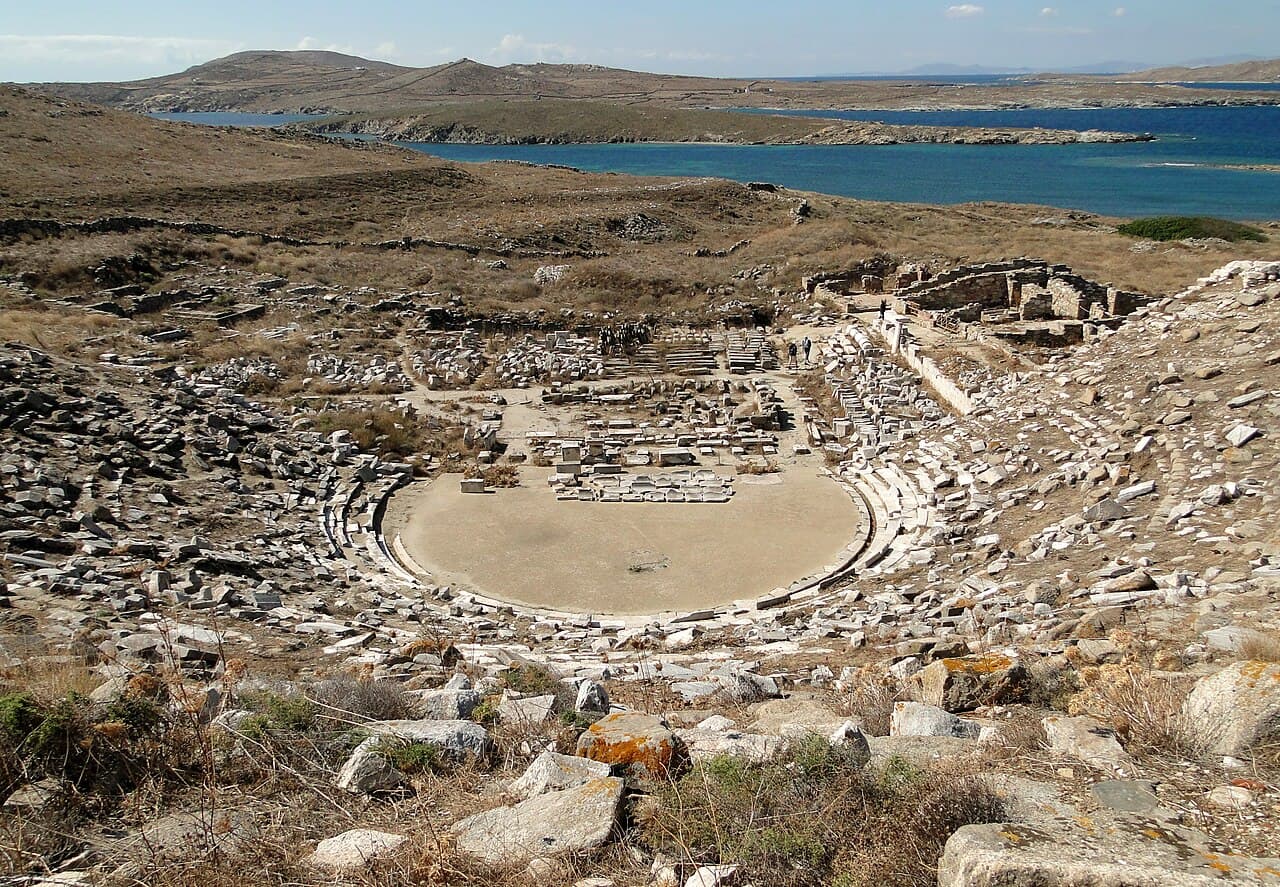
Photo : Bernard Gagnon (CC BY-SA 3.0)
Located on a small island in the Aegean Sea within the Cyclades archipelago of Greece, this site encompasses the remains of an ancient Greek sanctuary and settlement. The archaeological area contains substantial vestiges from multiple historical periods, including structures dating from the Archaic, Classical, and Hellenistic eras, reflecting the site's significance as a major religious and commercial center in antiquity. The ruins reveal a complex urban layout with temples, residential buildings, theaters, and trading facilities that illustrate patterns of ancient Greek life and religious practice. The site's historical importance derives from its role as a sanctuary dedicated to Apollo and its function as a crucial port in the eastern Mediterranean trade networks. The visual character is defined by scattered stone foundations, columns, and architectural fragments set against a rocky, sparsely vegetated landscape typical of the Aegean islands. The combination of archaeological remains and documentary evidence makes this location a significant source of knowledge concerning ancient Greek civilization and religious observance.