Cultural
Grottes de Yungang
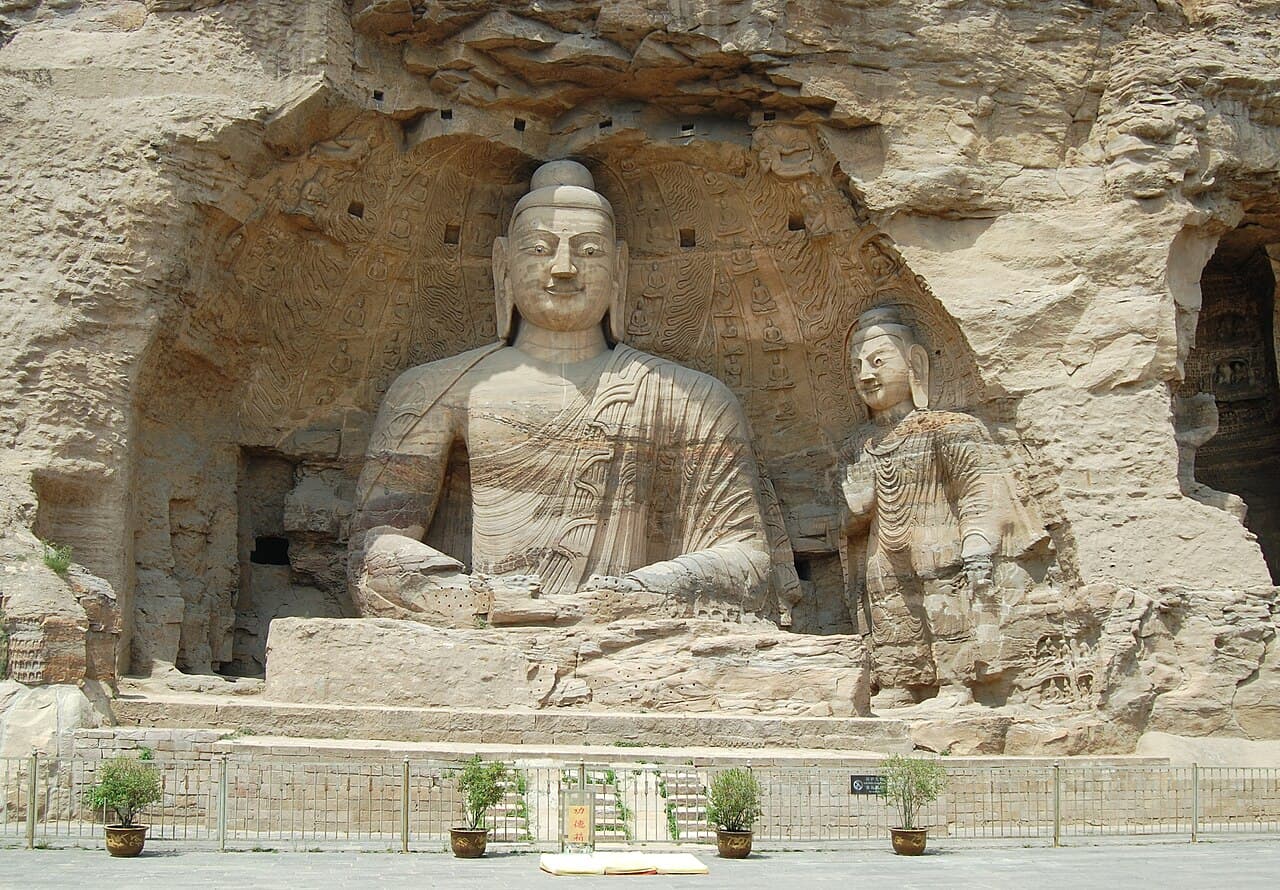
Photo : Marcin Białek (CC BY-SA 4.0)
Located in Shanxi Province in northern China, this Buddhist cave temple complex represents a significant achievement of religious art from the 5th and 6th centuries. The site comprises numerous grottos carved into a sandstone cliff face, containing sculptures, reliefs, and architectural elements that document the development of Buddhist artistic traditions during the Northern Wei Dynasty. The caves display a synthesis of Indian, Central Asian, and Chinese artistic influences, reflecting the cultural exchanges facilitated by the Silk Road. The sculptural program includes colossal Buddha figures, bodhisattvas, and intricate decorative carvings that vary considerably in style and execution across different cave chambers. The site bears witness to the establishment and flourishing of Buddhism in China during a formative period of the religion's development in East Asia. The Yungang grottoes constitute an important example of monumental Buddhist rock-cut architecture and stand as an archaeological record of religious patronage and artistic production in medieval China.